

The Vanguard CitiCar was a tiny, wedge-shaped electric vehicle produced from 1974 to 1977 by Sebring-Vanguard, Inc., based in Sebring, Florida.
Vanguard CitiCar: America’s Early Electric Car
The Vanguard CitiCar was one of the most unusual automobiles produced in the United States during the 1970s. Small, boxy, wedge-shaped and powered entirely by electricity, the CitiCar arrived at a time when gasoline prices and concerns about fuel supplies were changing the way Americans thought about transportation.
Built by Sebring-Vanguard, Inc. in Sebring, Florida, the CitiCar was not intended to compete with conventional family automobiles. It was designed primarily as an inexpensive, short-distance electric commuter vehicle.
Yet its importance goes beyond its modest performance. The CitiCar became one of the best-known American electric cars of the 1970s and helped demonstrate that battery-powered transportation could be produced and sold as a street-legal automobile.
Born During the 1970s Energy Crisis
The CitiCar appeared at almost exactly the right moment for an electric automobile.
The 1973 oil crisis caused gasoline prices to rise and created widespread concern about America’s dependence on petroleum. Automakers were beginning to pay more attention to fuel economy, while entrepreneurs saw an opportunity for small electric vehicles.
Robert G. Beaumont founded Sebring-Vanguard and developed the CitiCar as a simple solution for people who did not need a conventional automobile for every trip.
The car was deliberately uncomplicated. Its compact size, relatively light weight and electric drivetrain allowed it to perform the basic transportation duties for which it was intended without using gasoline.
A Very Different Kind of Automobile
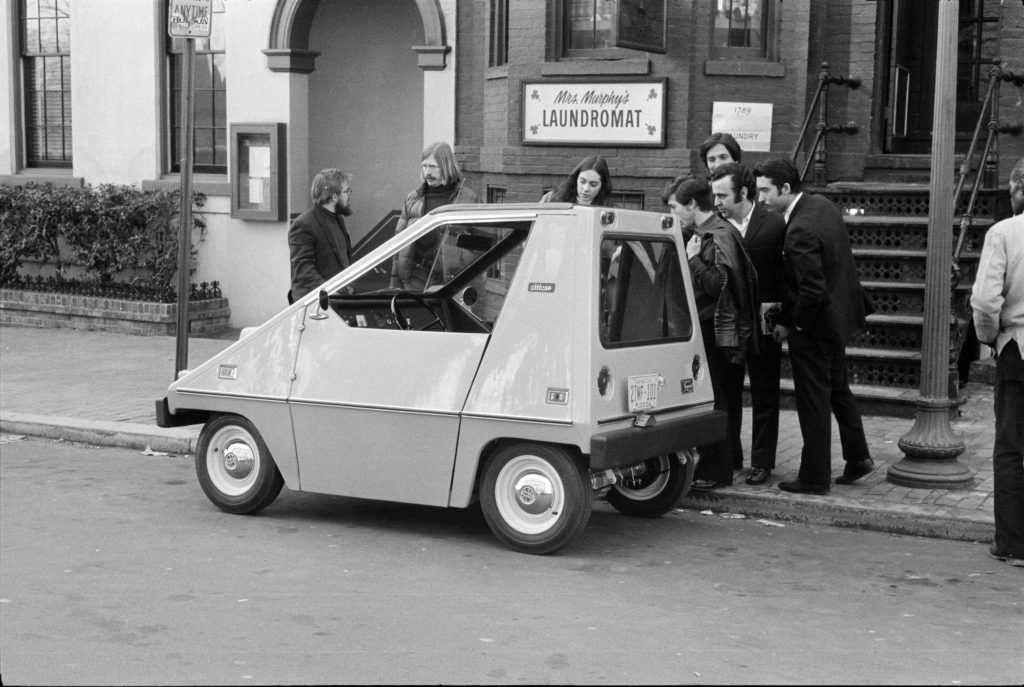
The CitiCar looked unlike virtually anything being sold by the major American automobile manufacturers.
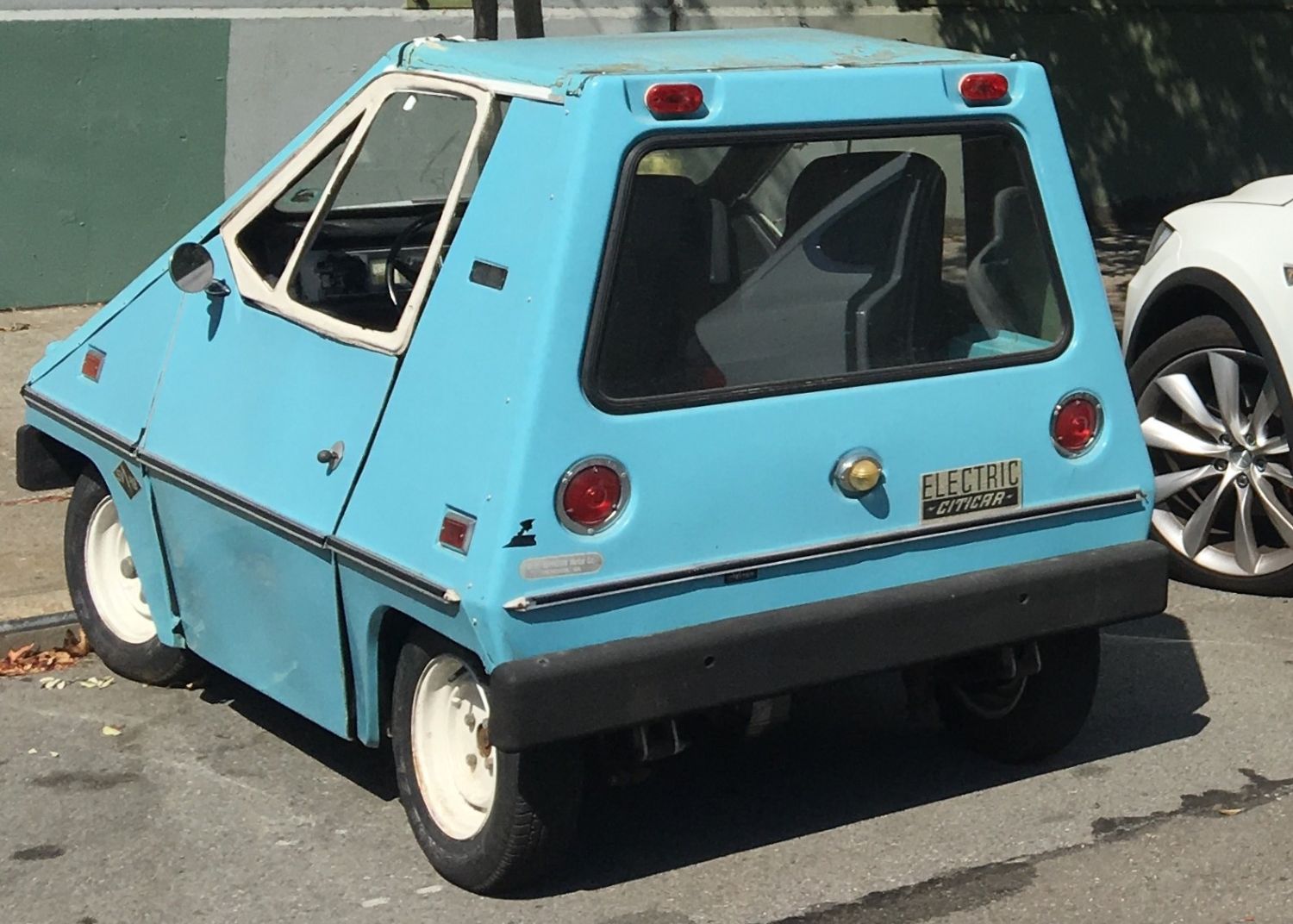
Its angular fiberglass body and wedge-shaped profile gave it an almost futuristic appearance. At the same time, its basic concept had much in common with the small electric vehicles and golf carts that were becoming increasingly popular.
The CitiCar was approximately eight feet long and weighed around 1,300 pounds, depending on configuration.
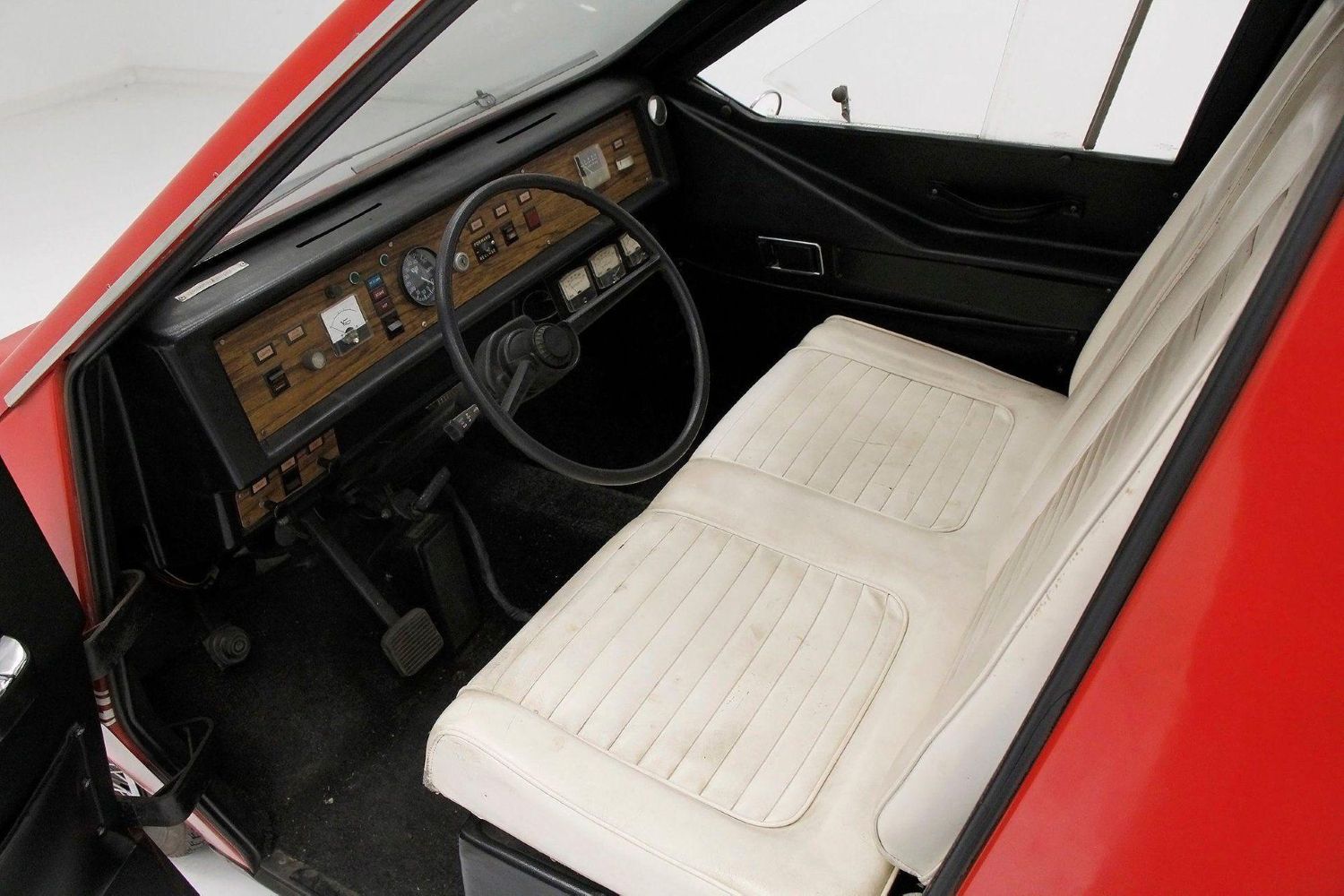
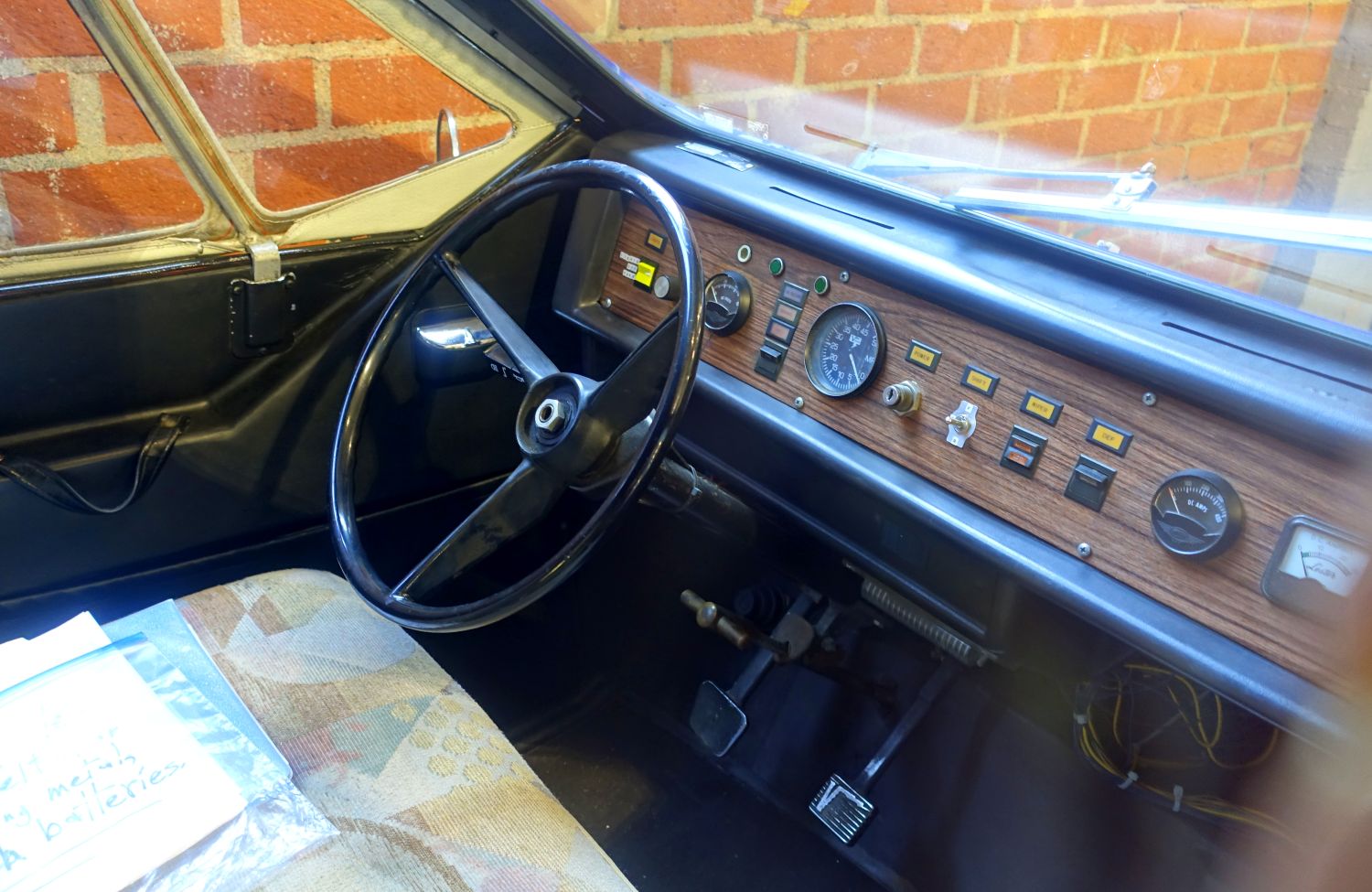
Inside, there was room for two occupants. The car was clearly designed around the idea that urban transportation did not necessarily require a large automobile.
Its small dimensions were an advantage in crowded areas, but they also reflected the limitations of the technology available at the time.
Electric Power
Unlike a modern EV with a sophisticated lithium-ion battery pack, the CitiCar relied on conventional lead-acid batteries.
Depending on the version, the car used six or eight 6-volt batteries to supply electricity to a DC electric motor.
Performance was modest.
Early CitiCars had relatively low power and limited top speed. Later versions became considerably more capable, with the more powerful cars reaching approximately 38–40 mph.
Range was also highly dependent on driving conditions, battery condition and speed. The CitiCar was therefore best suited for short trips rather than highway travel.
That limitation was not necessarily considered a major problem by its designers. The car’s purpose was local transportation.
CitiCar Versions
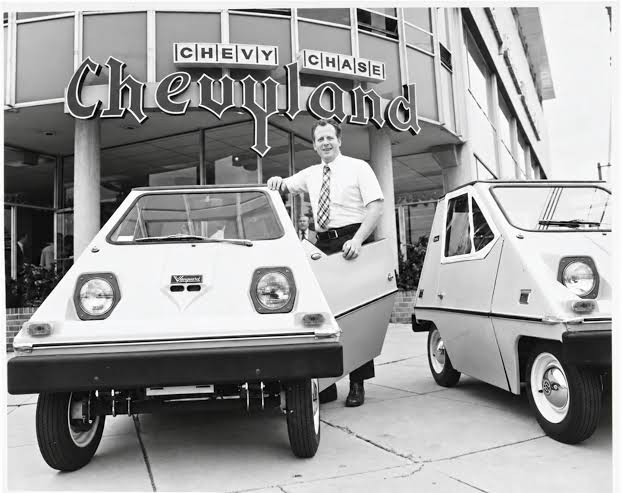
Several versions of the CitiCar were produced during its relatively short production life.
SV-36
The early SV-36 was among the first CitiCar configurations. It represented the basic concept: a lightweight two-seat electric automobile designed primarily for local transportation.
Performance was limited, but the vehicle’s simplicity helped keep it relatively inexpensive.
SV-48
The later SV-48 received improvements that made the CitiCar more practical and capable.
The name reflected its electrical configuration, with the vehicle using a higher-voltage battery arrangement than the earliest cars.
Transitional CitiCar
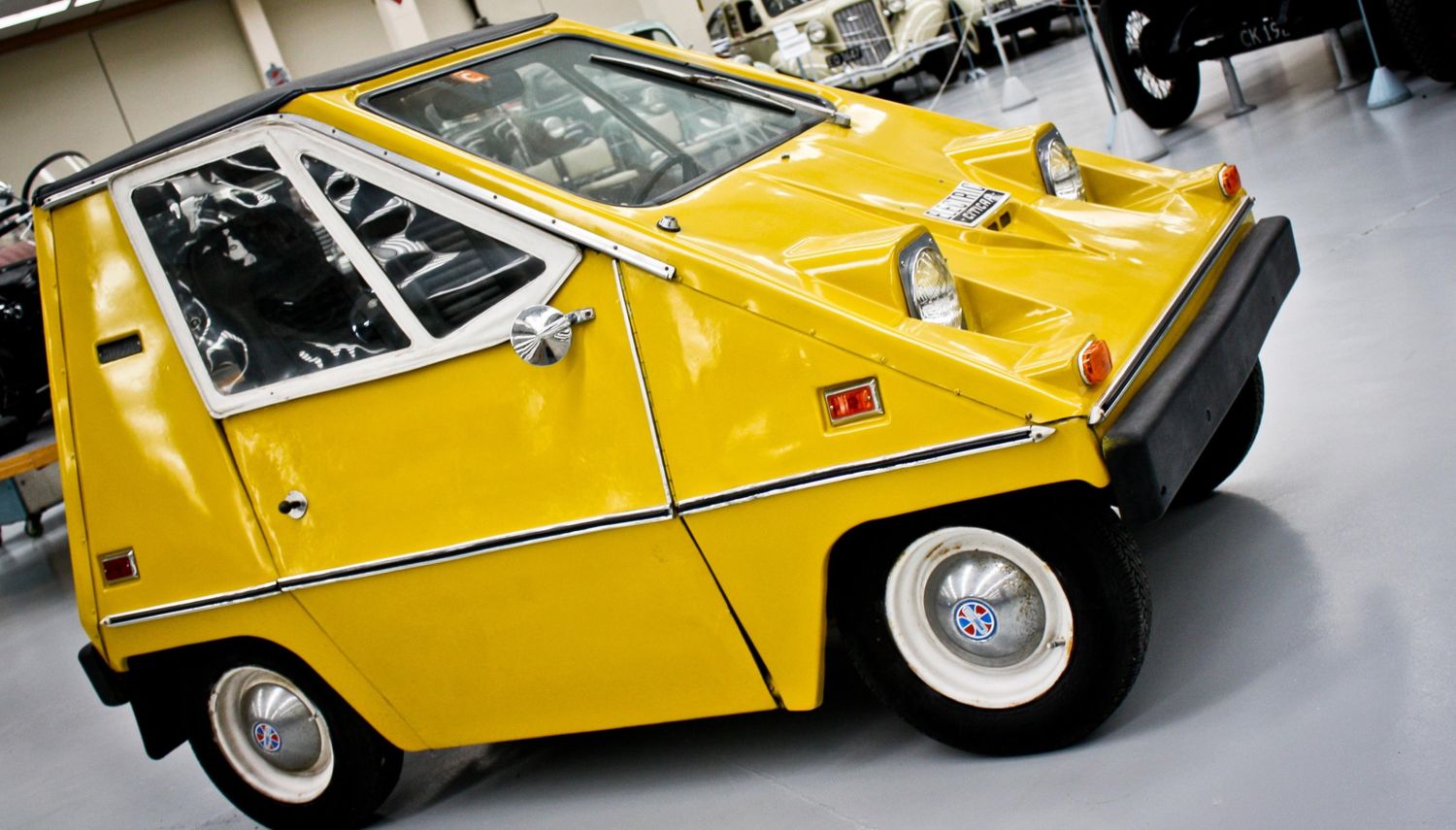
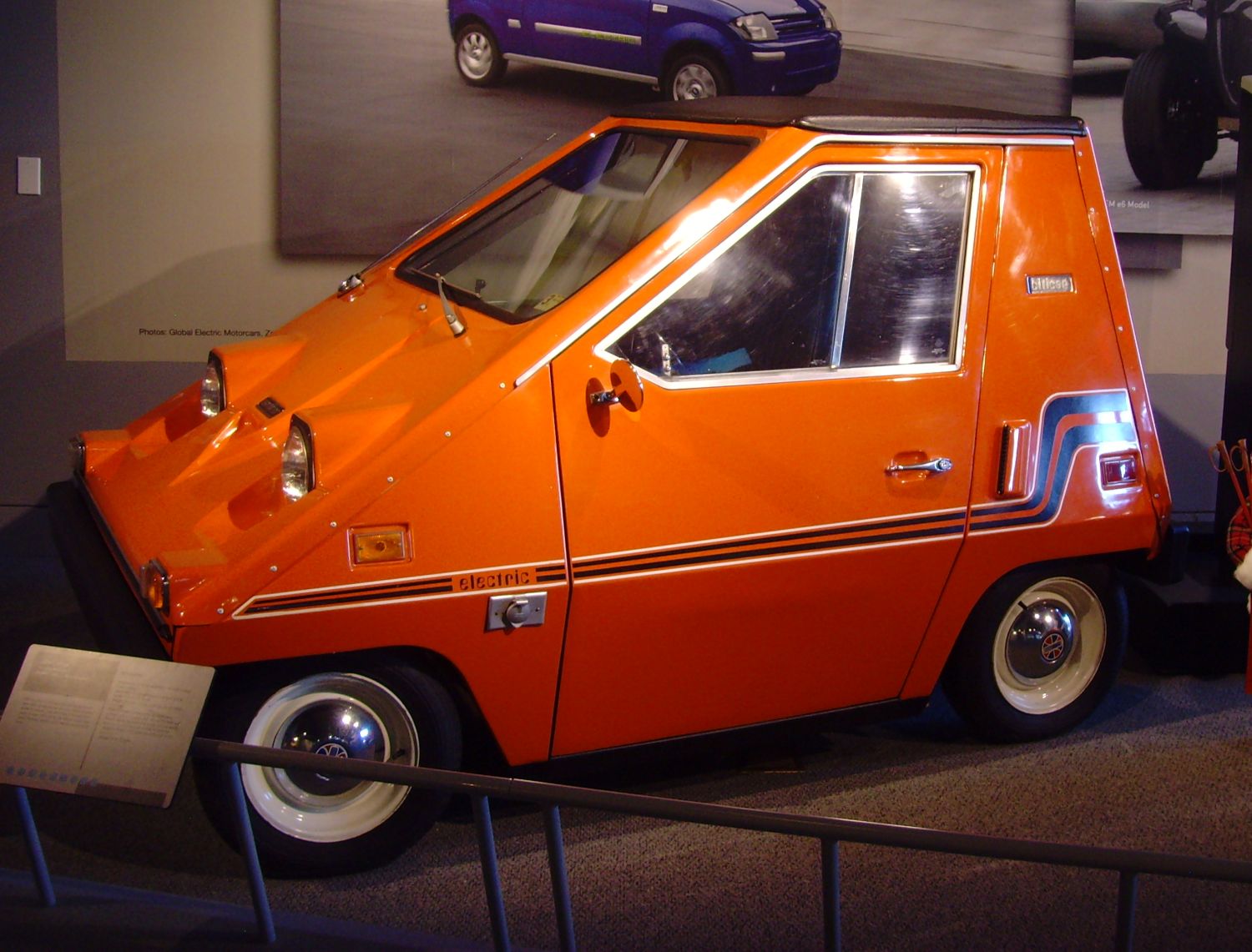
One of the more interesting developments came with the later Transitional CitiCar.
Cars produced from approximately the latter part of CitiCar production incorporated a more powerful 6-horsepower General Electric motor and an improved rear axle.
These changes addressed one of the major weaknesses of the earlier cars: limited performance.
The later cars are particularly interesting to collectors because they represent the evolution of the original CitiCar before production moved into the next generation of vehicles.
Production and Sales
The CitiCar became one of the more successful electric automobiles of its era.
Production estimates vary depending upon how the different versions and successor vehicles are counted, but several thousand CitiCars were produced during the Sebring-Vanguard period.
For a small American manufacturer producing an unusual electric automobile in the 1970s, that was a significant achievement.
The CitiCar demonstrated that there was a market—although a relatively small one—for simple electric transportation.
The End of Sebring-Vanguard
Sebring-Vanguard eventually ran into financial difficulties.
The company ceased production, but the CitiCar story did not end there.
The design and assets were acquired and developed into new vehicles, most notably the Comuta-Car and Comuta-Van.
These vehicles continued the basic idea of a small, battery-powered utility vehicle and extended the production history of the CitiCar design into the late 1970s and beyond.
The combined production of the CitiCar and its successors makes the family particularly significant in the history of American electric vehicles.
Decades Ahead of Its Time—or Simply Too Early?
Looking at the CitiCar from today’s perspective, it is tempting to describe it as an early Tesla.
That would be misleading.
The CitiCar lacked virtually all of the technology that makes today’s EVs practical for long-distance transportation. Its lead-acid batteries were heavy, charging infrastructure was virtually nonexistent, range was limited and performance was modest.
But the CitiCar was never supposed to be a Tesla.
Its significance was much simpler.
It demonstrated that an electric automobile could be built, sold and driven on American roads at a time when battery technology was nowhere near today’s level.
In that respect, the CitiCar deserves an important place in EV history.
The CitiCar Legacy
The Vanguard CitiCar is sometimes remembered primarily because of its unusual appearance. Its wedge-shaped fiberglass body certainly makes it one of the most recognizable electric vehicles of the 1970s.
Its greater importance, however, is what it represented.
The CitiCar was part of a small but important group of American electric vehicles that appeared during the energy crisis. It showed that electric propulsion was not merely a laboratory experiment or a golf-cart technology.
It could be used to build a real, street-legal automobile.
More than four decades later, electric vehicles have become an important part of the global automobile industry. Modern EVs can travel hundreds of miles, accelerate rapidly and recharge using sophisticated high-voltage systems.
The CitiCar could do none of those things.
But it came from a time when even putting an electric automobile into regular production was an ambitious undertaking.
The Vanguard CitiCar was small, slow and technologically primitive by today’s standards—but it helped keep the idea of the electric automobile alive in America during one of the industry’s most uncertain periods.
And that makes the little CitiCar much more than a curiosity from the 1970s. It is an important chapter in the history of the American automobile.
Automotive History
Vehicle: Sebring-Vanguard CitiCar
Manufacturer: Sebring-Vanguard, Inc.
Production: 1974–1977
Country: United States
Body style: Two-door, two-seat electric vehicle
Power: General Electric DC electric motor
Battery: Lead-acid
Historical significance: One of America’s most widely produced electric automobiles of the 1970s
You must be logged in to post a comment.