
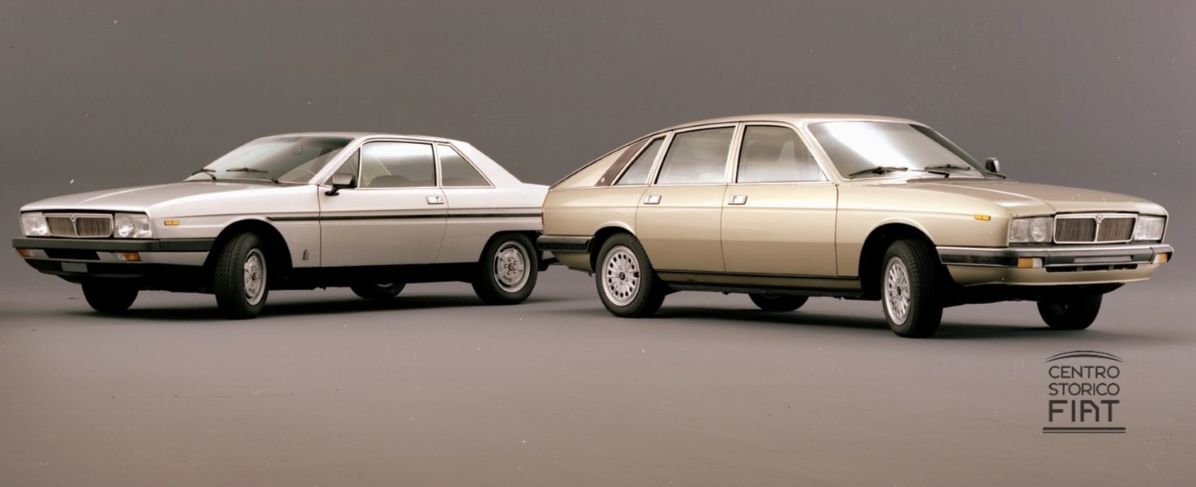
Introduced at the 1976 Geneva Motor Show, this Gamma was Lancia’s flagship executive car (E-segment) and the last to feature a completely in-house engine design.
- Variants:
- Berlina: A 4-door fastback saloon with a conventional boot.
- Coupé: A sleek 2-door version designed by Pininfarina.
- Technical Innovation: It used a lightweight aluminum flat-four (boxer) engine (2.0L or 2.5L) rather than a traditional V6 to keep the center of gravity low and save weight.
- Design: While praised for its elegant Pininfarina styling, it was notorious for a design flaw where the power steering pump was driven by a camshaft belt; if the wheel was turned hard while the engine was cold, the belt could skip and cause catastrophic engine failure.
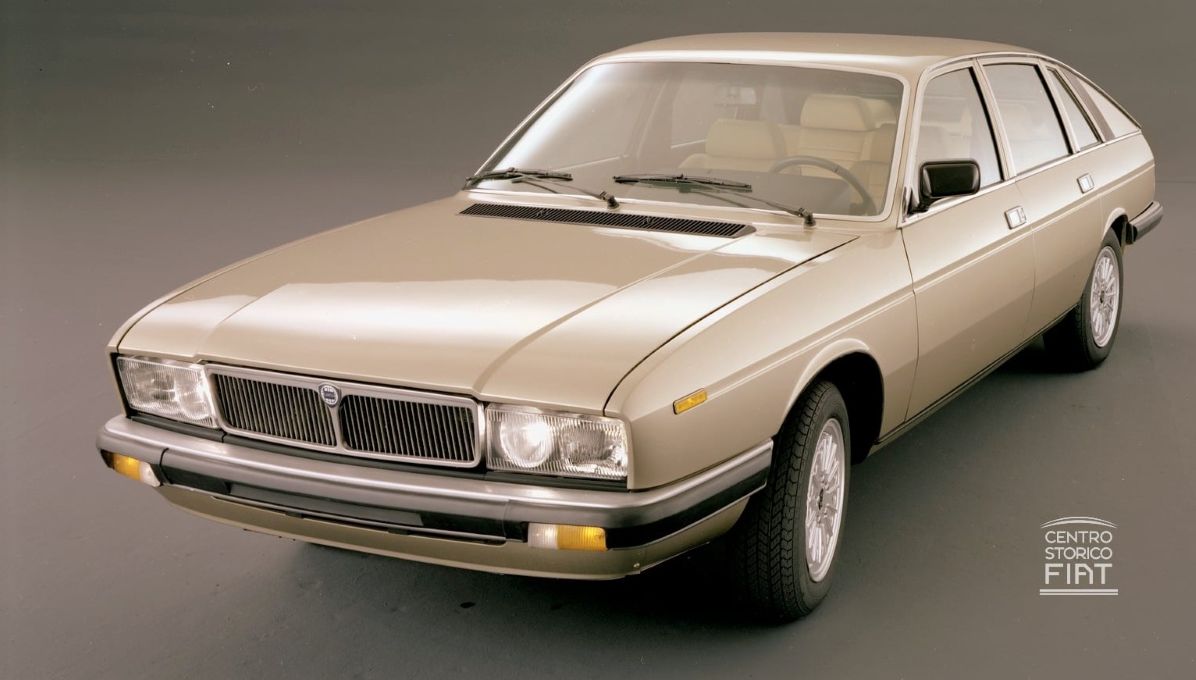
In the mid-1970s, the Lancia brand made its return by offering a genuine flagship. The new Lancia Gamma maintained the long-standing front-wheel drive with a new boxer engine in two bodywork options: an original, sleek hatchback with a truncated tail and a highly elegant three-volume coupé.
After entering the Fiat orbit in the late 1960s, the Lancia brand was given a new lease of life to develop other projects. The result was two plans for two families of cars: the first to go public was the Beta, debuted at the Turin Motor Show in November 1972. However, the ambition among Fiat’s senior management was to maintain its hallmark over the years as a Turin-based luxury brand, by once again producing a genuine flagship, a vehicle in a higher category than the Beta.
To create the new Lancia Gamma, intense effort in the design team was focused on the choice of engine, where displacement, power and torque appropriate to the car’s calibre were essential. Their various solutions included the glorious V6 seen in the Flaminia, which previously made the fame of the Aurelia, and the evolution of the Flavia boxer engine, with its displacement increased to two litres. Having also put aside the V6 in the Dino Ferrari and Fiat models that would later be used in the Stratos, the decision was made to design and construct a new engine with four opposed cylinders, where the only feature shared with the Flavia was its boxer architecture; it was completely different otherwise. With extensive use of aluminium, the sophisticated new unit was one of the lightest: the brand-new 2.5-litre 4-cylinder delivered 140 hp very roundly, as befitted a genuine flagship. To comply with Italian legislation levying a higher VAT rate on cars with displacements exceeding two litres, a 1,999-cc unit delivering 120 hp was produced based on the 2.5-liter boxer.
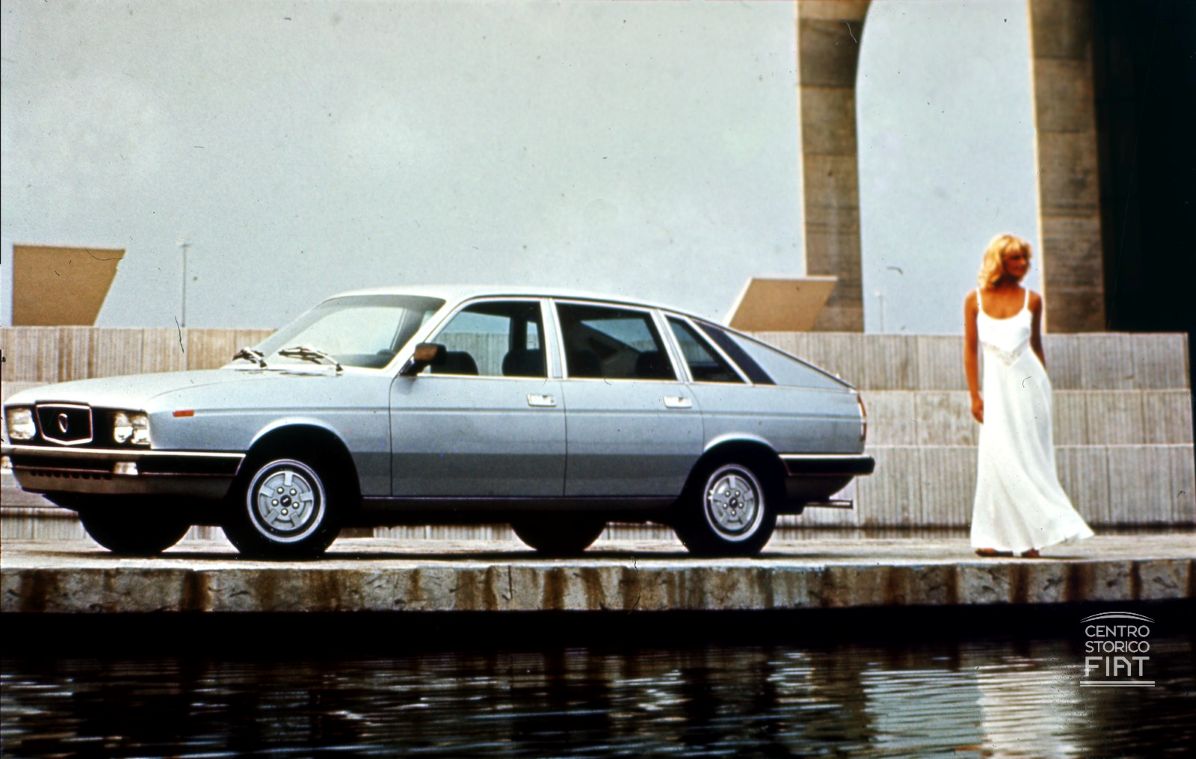
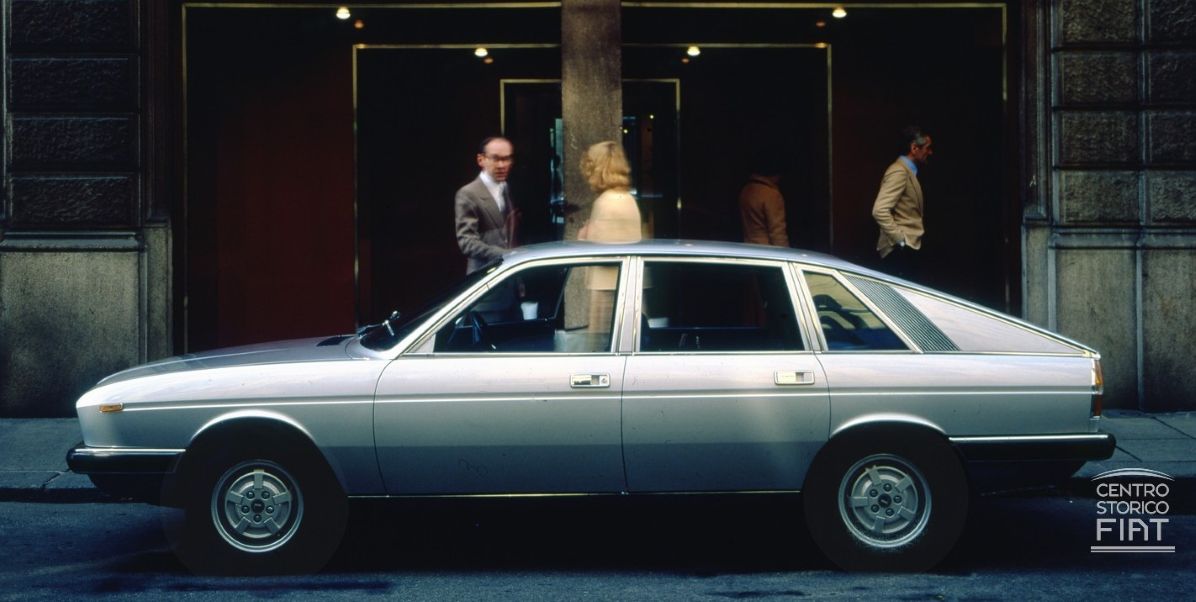
The overall architecture of the Lancia Gamma showed great attention to safety, although the standout feature was the design of the bodywork, produced in conjunction with Pininfarina in an unconventional manner for its time: a hatchback with sleek lines and a truncated tail. The brightness of the spacious passenger compartment was improved greatly by the large amounts of glazing: three windows on the sides and a big, fixed and heavily inclined rear window.
To maintain the traditional Lancia style, attention was also paid to the interior: the back seats were contoured to provide two seats as comfortable and enveloping as those in the front. It was ideal for the family for the considerable load capacity of the boot, with a rear door that opened vertically and the end of the structure following on from the rear window as an original Venetian blind. Further refinements – such as high-quality fabrics, height-adjustable steering wheel, four electric windows and wing mirror adjustment, equally electric – were added to define its elegant and prestigious style.
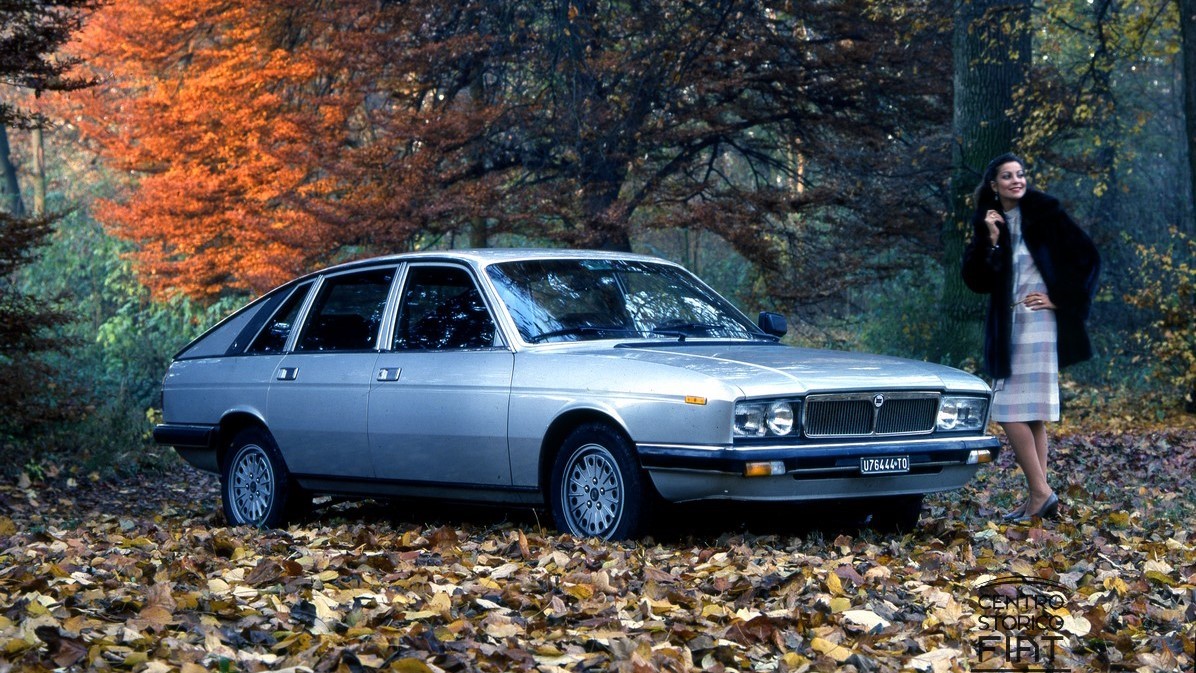
The main features of the Lancia Gamma that debuted in Geneva in 1976 were luxury and comfort. Alongside the elegant Gamma Coupé, the second series came to be four years later, with refined mechanical technology by adopting electronic injection.
The new flagship was officially unveiled in 1976, in the debut of the Lancia Gamma at the Geneva International Motor Show. On the stand, the saloon car was flanked by the elegant coupé version proposed by Pininfarina and designed by Aldo Brovarone.
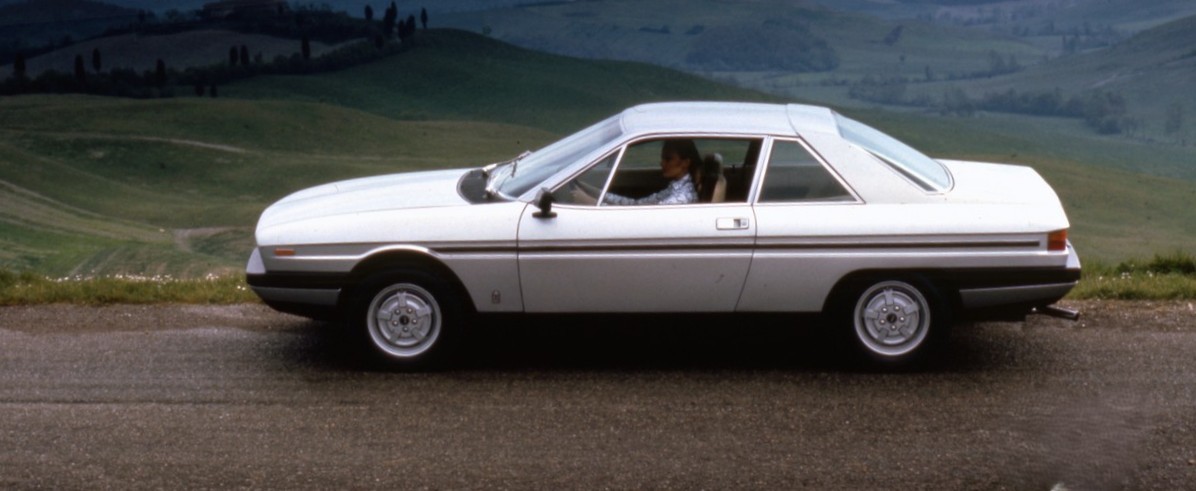
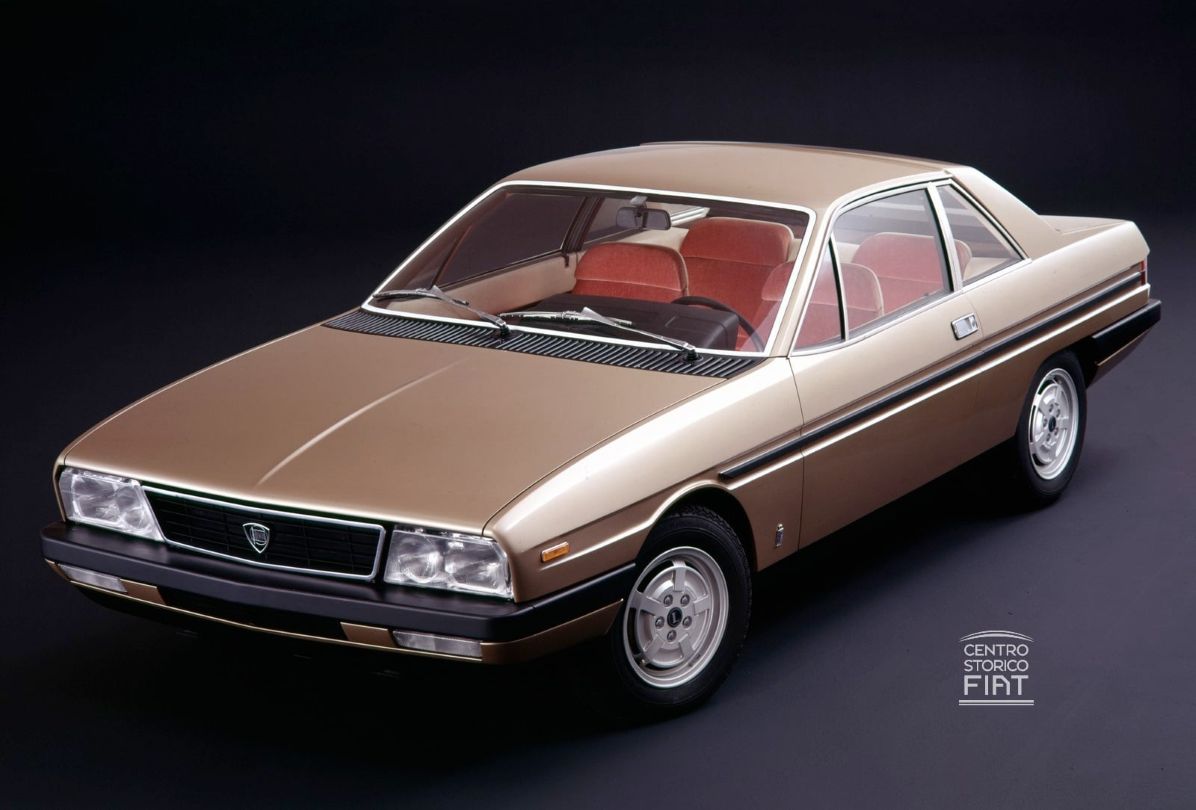
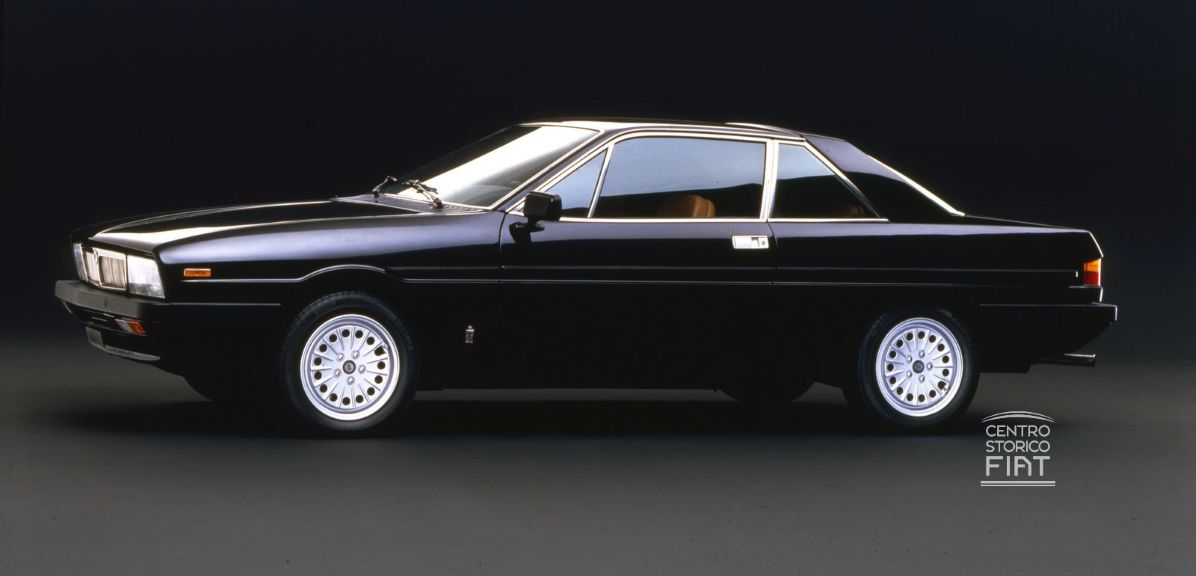
Pininfarina created the Lancia Gamma Coupé by shortening the wheelbase on which the Biella-based designer produced a sleek two-door, three-volume grand tourer. With sharp edges, its proportions were particularly notable: featuring a windscreen and rear window with marked, very similar tilts, it sported a long, low bonnet and a rear door with two sloping ribs, lowering the central section in an original, aerodynamic style. The large bumpers are also well connected, demonstrating the attention accorded to regulations in foreign markets. The automatic height adjustment of the headlights was useful and technically refined.
The elegance and accuracy of the coupé version’s design risked overshadowing the original saloon car, but despite being unveiled together in 1976, the coupés arrived in dealerships over a year after their debut in Geneva, leaving room for the sleek four-door to become more popular.
Between late 1978 and early ’79, mechanical changes were made to improve reliability. Further updates came in the 1980 second series, bringing with it the adoption of the Bosch “L-Jetronic” electronic injection on the larger displacement engine that took the name Lancia Gamma 2.5 i.e., whereas the 2.5-litre carburettor version remained in production for export only.
In addition to the engine, the new features of the Lancia Gamma second series lay in the grille, standardised with all other Lancia models to offer once again, but horizontally, the typical shield form seen in previous cars. The front bumper was also modified to improve air flow through the new intake, and the alloy wheels were redesigned for the lowered tyres. In the interior, the dashboard was completely revamped, with a digital clock that had already appeared in the final models from the first series, along with a knob and upholstered gear lever. The seats also came in a new design, including with optional fabrics by Ermenegildo Zegna, timed courtesy lights and an adjustable reading light.
As well as the saloon car, the Lancia Gamma Coupé was also refreshed: the 2.5-litre only came in an electronic injection version and was also available with four-speed automatic transmission. In the interior, the same changes were made as in the saloon car, to the dashboard and the ceiling lights, whereas the seats – already different from the first-series saloon – were less futuristic but more enveloping for both the legs and the shoulders. The driving position was excellent, one of the best among the GT cars at the time, especially in terms of comfort, suitable for driving long distances at high speed.
Even before the launch of the second series, in 1978 Pininfarina designed an original road-legal version based on the coupé: the T-Roof spider with a removable sunroof anchored to a sturdy central/rear roll bar. In late 1980, Pininfarina also brought the coupé’s design to the saloon car’s floor by launching the Scala, a three-volume, four-door sports car with a silhouette very similar to the coupé but with two more doors and the space of a hatchback saloon. Long before the market shifted towards station wagons, Pininfarina came up with the Olgiata a curious version with a tailgate but only two side doors, made sportier by a spoiler between the roof and rear door.
The three models from the Piedmont coachbuilder were juxtaposed with a proposal from Giorgetto Giugiaro’s Italdesign: Megagamma. Giugiaro raised the bodywork considerably to increase the entire volume: the result was a very angular hatchback, the prototype of which recalled the same designer’s plans for New York taxis two years earlier. In 1980 came the Gamma 3V, a three-volume interpretation of the Gamma saloon car. Still in perfect working order, the model is now one of the cars on display at the Stellantis Heritage Hub in Turin.
In 1984, production ended to pass the baton to the Lancia Thema, the flagship that became the blue car par excellence, blending elegance, luxury and performance.
Lancia returns to the flagship segment
The Lancia Gamma was developed at a time of deep transformation for the Brand. Following Lancia’s integration into the FIAT Group in the late 1960s, the Turin-based manufacturer launched an important programme to renew its product range. The first result of this effort was the Beta, introduced in 1972. However, among management’s ambitious goals was to bring Lancia back into the flagship segment, which had been left vacant after production of the Flaminia ended in 1969. The Gamma was therefore conceived as the new top-of-the-range Lancia, while retaining some of the technical principles that characterised the Brand’s earlier tradition: front-wheel drive, the pursuit of sophisticated engineering solutions, and a distinctive design language compared with competitors. With these defining ingredients – which faced technical improvements and new equipment through the years – the Gamma faced the market with determination and boldness. Production came to an end in 1984 after around 22,000 units, when it handed the baton to the new Lancia Thema, widely regarded as the quintessential Italian government car, capable of blending elegance, luxury and performance. It is also worth remembering that although the Gamma did not fully establish itself in the European flagship-car market during its commercial life, it has been increasingly reassessed by enthusiasts and collectors for its uniqueness and its role in the Brand’s History.
The birth of Lancia’s new boxer engine
To create the new Lancia Gamma, intense effort in the design team was focused on the choice of engine, where displacement, power, and torque appropriate to the car’s calibre were essential. Their various solutions included the glorious V6 seen in the Flaminia, which previously made the fame of the Aurelia, and the evolution of the Flavia boxer engine, with its displacement increased to two litres. Having also put aside the V6 in the Dino Ferrari and Fiat models that would later be used in the Stratos, the decision turned instead to design and construct a new engine with four opposed cylinders, where the only feature shared with the Flavia was its boxer architecture. With extensive use of aluminium, the sophisticated new unit was one of the lightest: the brand new 2,5 litre 4-cylinder delivered 140 hp very roundly, as befitted a genuine flagship. To comply with Italian legislation levying a higher VAT rate on cars with displacements exceeding two litres, a 1.999 cc unit delivering 120 hp was produced based on the 2.5-liter boxer.
Lancia Gamma Saloon, the unconventional flagship
At a time of major change in the automotive market, also shaped by the energy crisis, the Lancia Gamma represented a modern prestige car that was safe and efficient, as demonstrated, for example, by the strong emphasis placed on aerodynamic (the saloon had a drag coefficient of 0,37) and on ride comfort, reflecting Lancia’s traditional approach to designing high-end cars. One of the Gamma’s most distinctive aspects was undoubtedly its design, created in collaboration with Pininfarina. It departed from the traditional conventions of the time with a sleek two-box silhouette and a truncated rear: an undeniably original styling solution for a 1970s executive saloon. The brightness of the spacious passenger compartment was improved greatly by the large amounts of glazing: three windows on the sides and a big, fixed and heavily inclined rear window. To maintain the traditional Lancia style, attention was also paid to the interior: the back seats were contoured to provide two seats as comfortable and enveloping as those in the front. It was ideal for the family for the considerable load capacity of the boot, with a rear door that opened vertically and the end of the structure following on from the rear window as an original Venetian blind. Further refinements, such as high-quality fabrics, a height-adjustable steering wheel, four electric windows, and wing mirror adjustment, were added to define the elegance of this style.
Lancia Gamma Coupé: Pininfarina Elegance interpreted as a Gran Turismo
Pininfarina created the Lancia Gamma Coupé by shortening the wheelbase of a chassis on which the Biella-based designer produced a sleek two-door, three-volume grand tourer. Its well-judged proportions are defined by sharp edges: characterised by a windscreen and rear window with marked, very similar angles, it features a long, low bonnet and a boot whose central section is lowered by two sloping creases, creating an original and aerodynamic style. The large bumpers are also well integrated, while complying with the regulations of foreign markets. The automatic height adjustment of the headlights was useful and technically refined. If the exterior expresses elegance and formal restraint, the interior represents one of the project’s most innovative aspects. The cabin of the Gamma Coupé was in fact described as a true “travelling lounge”, as it was conceived as a welcoming and refined space, capable of recreating the atmosphere of an environment that, in modern terms, we would call “living”. The interior, designed by Piero Stroppa, stood out for its dashboard inspired by 1970s product design, its original colour combinations and the quality of its materials. The large glazed surfaces helped make the cabin especially bright, while the wide, well-contoured seats ensured a high level of comfort on long journeys. Moreover, the elegance and precision of the coupé’s interior and exterior design risk almost overshadowing the original saloon version. Yet although both were unveiled together in 1976, the coupé only reached dealerships more than a year after its debut in Geneva, thus leaving room for the sleek four-door model to establish itself first.
The Gamma is updated in the 1980s
Between late 1978 and early ’79, mechanical changes were made to improve reliability. Further updates came in the 1980 second series, bringing with it the adoption of the Bosch “L-Jetronic” electronic injection on the larger displacement engine that took the name Lancia Gamma 2.5 i.e., whereas the 2.5-litre carburettor version remained in production for export only. In addition to the engine, the new features of the Lancia Gamma second series lay in the grille, standardised with all other Lancia models to offer once again, but horizontally, the typical shield form seen in previous cars. The front bumper was also modified to improve air flow through the new intake, and the alloy wheels were redesigned for the lowered tyres. In the interior, the dashboard was completely revamped, with a digital clock that had already appeared at the end of the first series, along with a knob and upholstered gear lever. The seats also came in a new design, including with optional fabrics by Ermenegildo Zegna, timed courtesy lights and an adjustable reading light. The Lancia Gamma Coupé was also refreshed: the 2.5-litre only came in an electronic injection version and was also available with four-speed automatic transmission. In the interior, the same changes were made as in the saloon car, to the dashboard and the ceiling lights, whereas the seats – already different from the first-series saloon – were less futuristic but more enveloping for both the legs and the shoulders. The driving position was excellent, one of the best among the GT cars at the time, especially in terms of comfort, making it well suited to long-distance travel at sustained speeds.
The Concept Cars and the interpretations of Turin’s great coachbuilders
At the same time as the launch of the second series, Lancia decided to explore new variants aimed at broadening the range. Although these versions were never put into production, they were nevertheless well received by both critics and the public. The first came in 1978 with a targa version derived from the coupé designed by Pininfarina: the T-Roof spider with a removable sunroof anchored to a sturdy central/rear roll bar. In late 1980, Pininfarina also brought the coupé’s design to the saloon car’s floor by launching the Scala, a three-volume, four-door sports car with a silhouette very similar to the coupé but with two more doors and the space of a hatchback saloon. Long before the market shifted towards station wagons, Pininfarina came up with the Olgiata, a curious version with a tailgate but only two side doors, made sportier by a spoiler between the roof and rear door. Alongside the three models produced by the Turin coachbuilder, two further proposals were presented: the first, in 1978, by Giorgetto Giugiaro’s Italdesign, named Megagamma. Giugiaro raised the bodywork considerably to increase the interior volume: the result was a very angular hatchback, that echoed the project Italdesign had developed two years earlier for New York taxis. The second car proposal arrived in 1980, by the brand’s Centro Stile: the Gamma 3V, another three-volume interpretation of the Gamma saloon car. Still in perfect shape, the vehicle is now part of the collection on display at the Stellantis Heritage Hub in Turin.
You must be logged in to post a comment.