
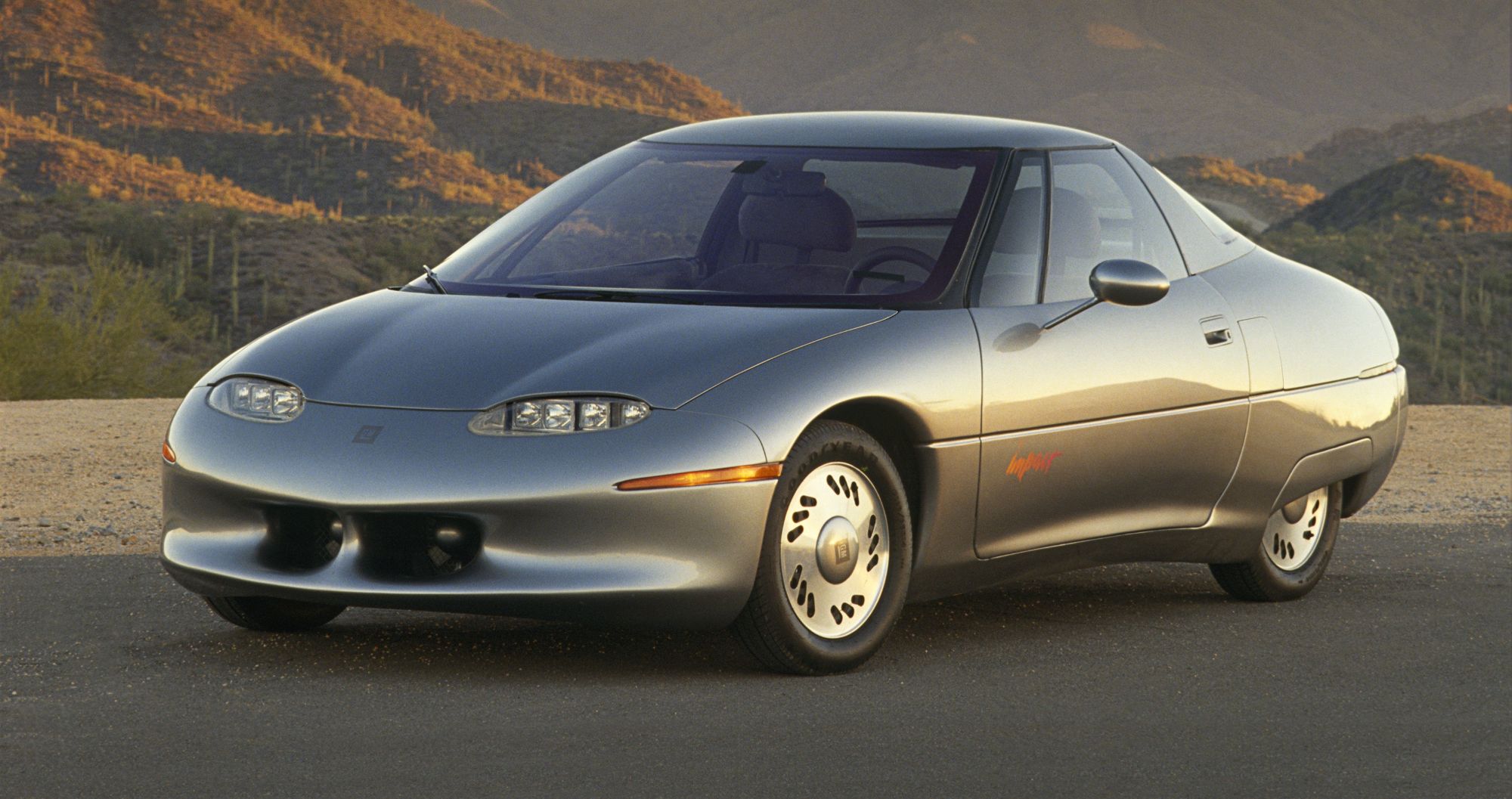
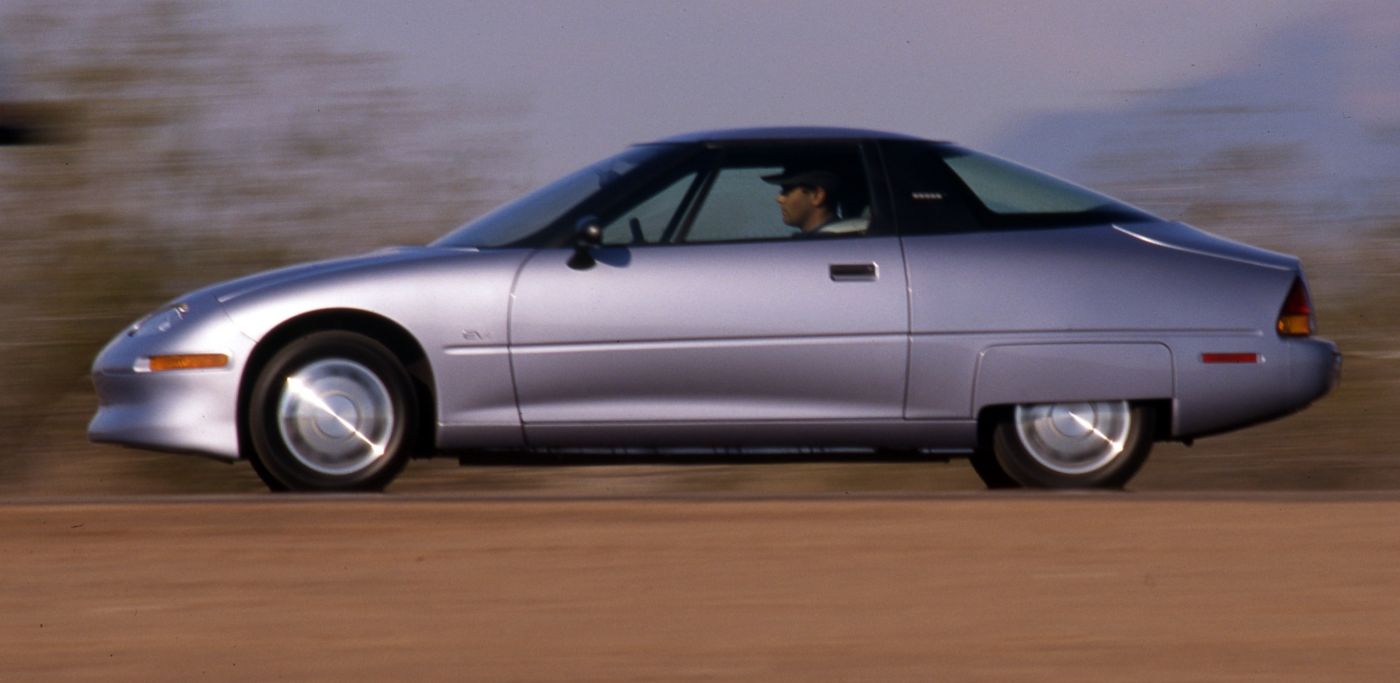
The GM EV1 (1996–1999) was the first mass-produced, purpose-built electric vehicle from a major automaker, pioneering modern EV tech with a 0.19 drag coefficient and up to 100-mile range. Leased exclusively to consumers in1990s California and Arizona, the program was cancelled and most cars destroyed.
The GM EV1 was not GM’s first electric vehicle. In the early 20th century – a time when EVs were surprisingly commonplace – GM sold electric trucks. Starting in the 1960s, the company experimented with various EV projects, and by the end of the century, it was increasingly clear that electrification would play a huge part in our future. In 1990, GM debuted the Impact concept, previewing a revolutionary electric car.
Over the course of the 1990s, GM developed the Impact into the EV1, a car that first reached lessors in 1997. GM leased around 1,000 EV1s built at a special facility in Lansing, Michigan.
A pioneering program — and a lasting legacy
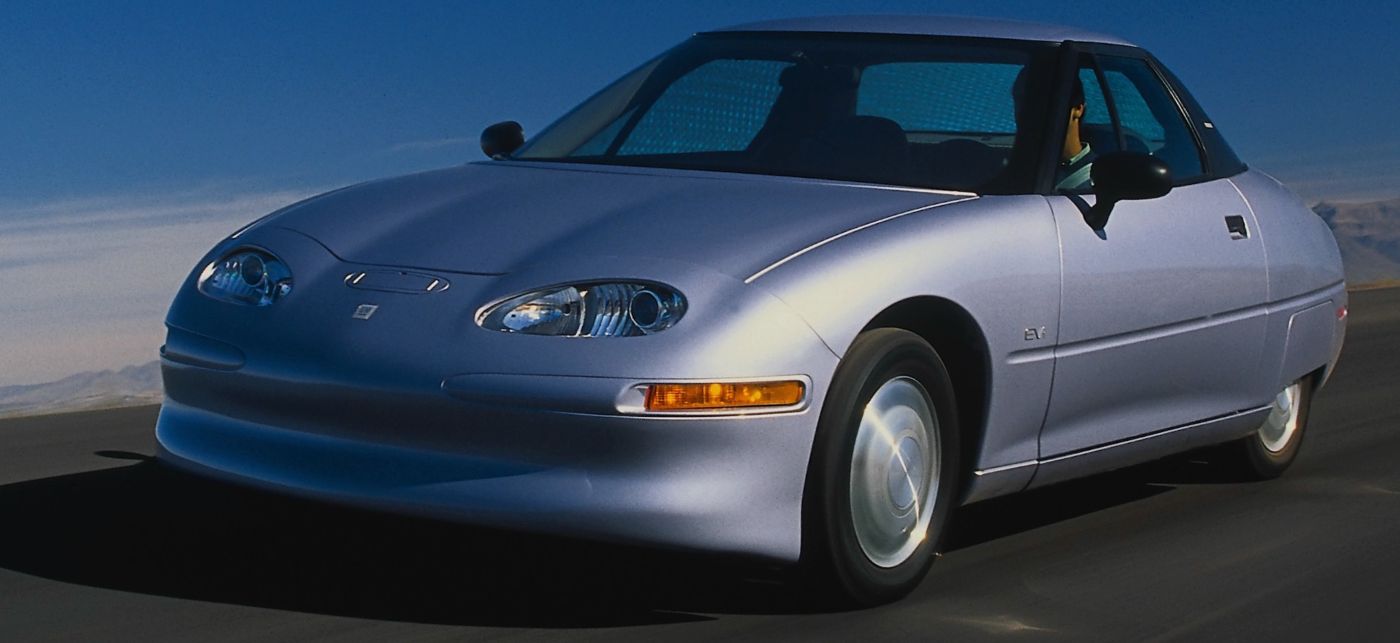
The GM EV1 remains one of the most important vehicles in automotive history. Introduced in 1997, it was the first modern mass-produced, purpose-built electric vehicle from a major automaker; not a conversion, not a concept, but a car designed from the ground up to run on electricity.
The program was pioneering in every sense. In addition to electric propulsion, it represented an extreme dedication to aerodynamics and even featured an antenna embedded under the roof panel. The EV1 was never sold – only leased – and later recalled, leaving only a handful of non-drivable examples in museums and universities. For years, it existed more as a symbol than a machine: proof that GM had imagined an electric future decades before the rest of the industry caught up.
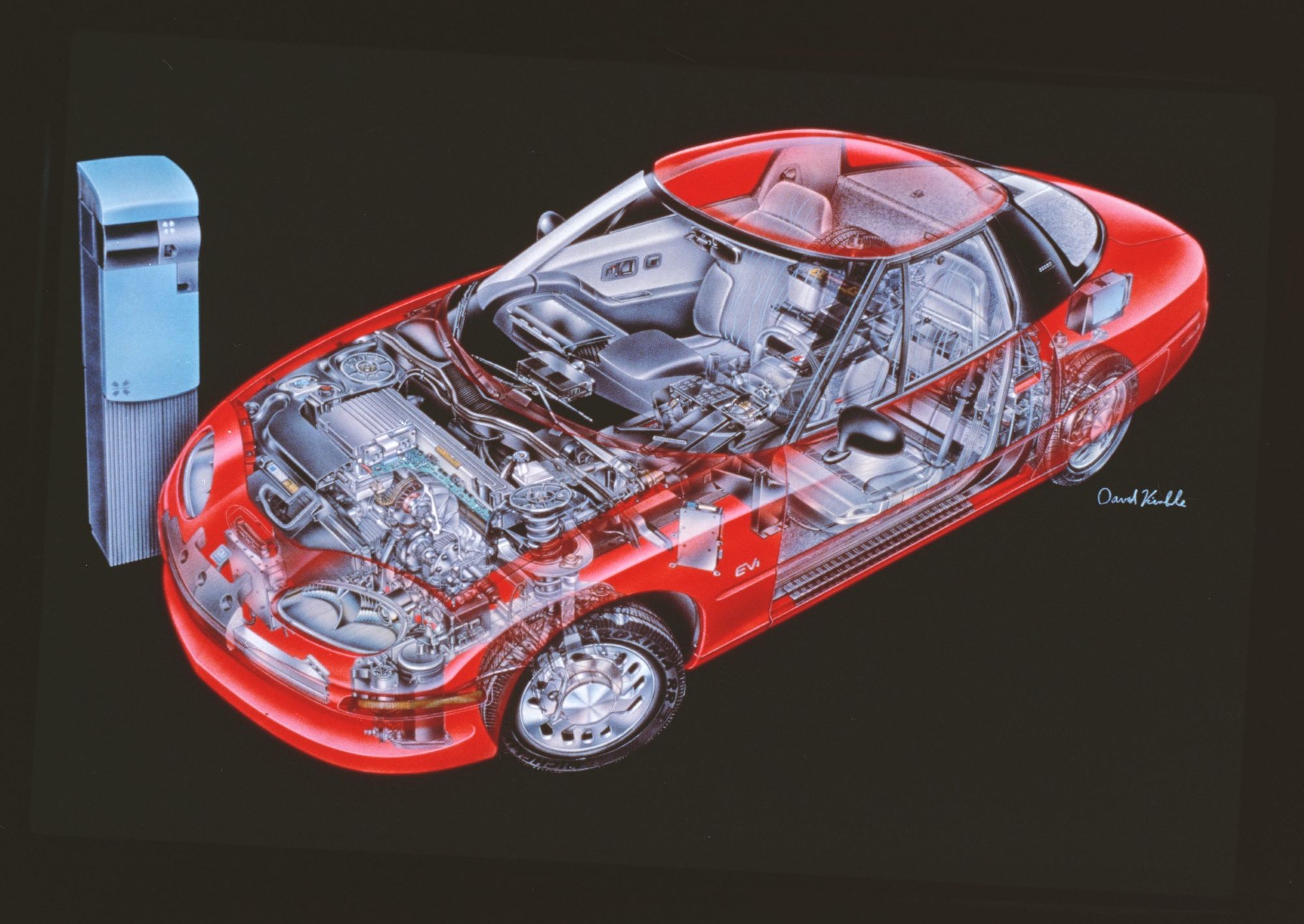
But the EV1’s legacy remains. The EV1 became a platform to pioneer new technologies, laying the groundwork for features that would become commonplace in today’s cutting-edge EVs.
- Heat pump: The EV1 was the first vehicle to use a heat pump for climate control, boosting energy efficiency. Today, every GM EV features a heat pump, both for climate control and battery-temperature management.
- Advanced braking system: The EV1 used a mix of conventional hydraulic brakes and regenerative braking from the electric motor to slow the car. Engineers developed a system for the car that translated a driver’s brake-pedal input into an electronic signal that blended regenerative and friction braking. It’s a precursor to the braking systems used in GM’s modern EVs, which also add One-Pedal Driving1 and paddle-actuated Regen-On-Demand2 capability.
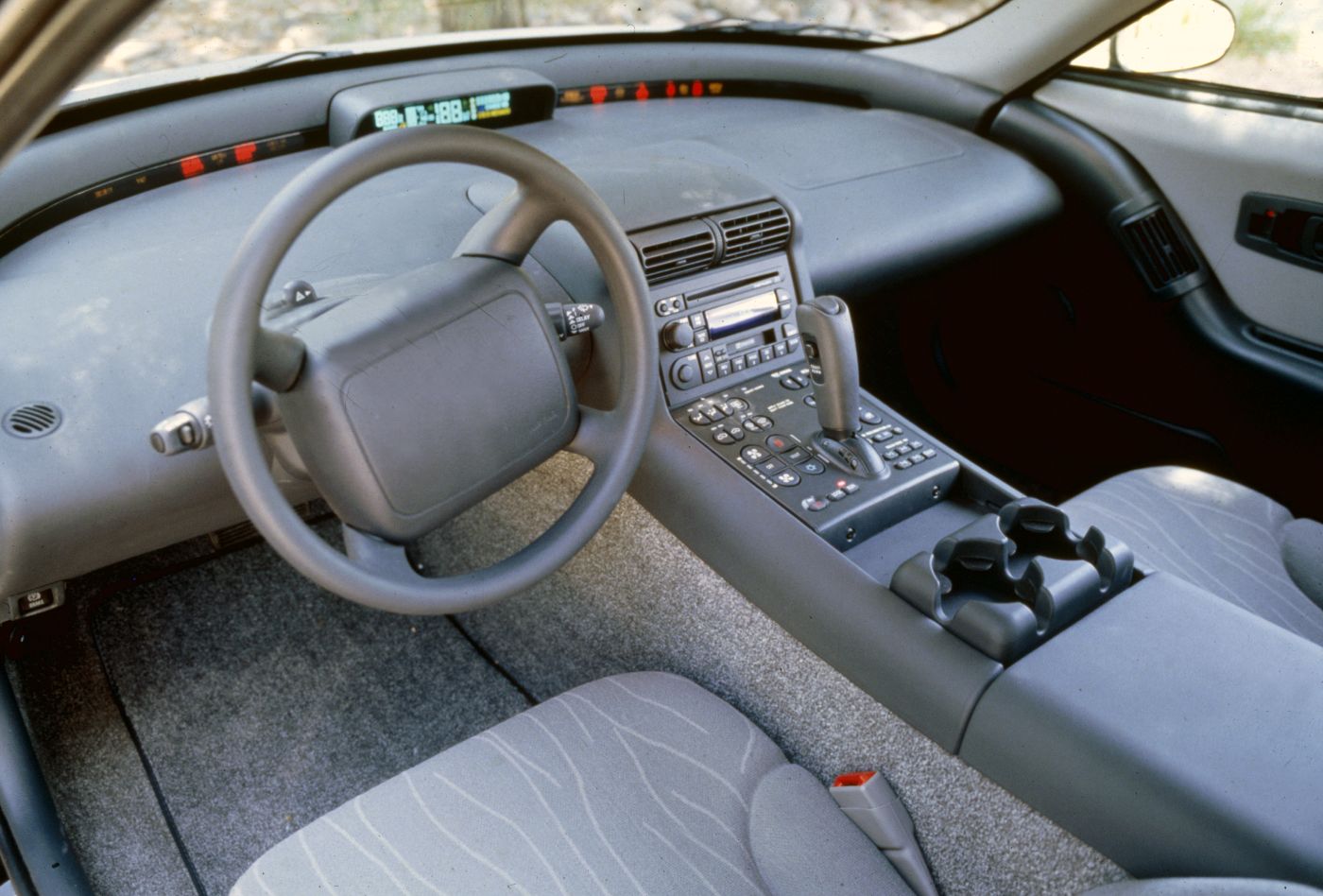
- “By-wire” controls: For decades, every control in a car was mechanically actuated. With the EV1, the accelerator pedal, brake pedal, parking brake, and gear selector were all fully electronic. The power steering was also electro-hydraulic, a predecessor to today’s fully electric power-assist systems.
- Low-rolling-resistance tires: To help maximize range from the battery pack, EV1 engineers worked with a supplier to develop new, more-efficient tires.
- Aluminum space frame chassis: Rather than using a conventional steel structure, EV1 engineers chose a unique aluminum space frame to save weight, helping to increase range. Today’s Chevrolet Corvette uses a similar design.
Key Facts and History
- Availability: The EV1 was lease-only and never officially sold to the public. Around 1,117 units were produced and leased in select markets like California and Arizona.
- Generations & Range:
- Gen 1 (1997): Used lead-acid batteries with an EPA range of approximately 70–95 miles.
- Gen 2 (1999): Introduced Nickel-Metal Hydride (NiMH) batteries, extending the range to roughly 142 miles.
- Performance: It was powered by a 137-hp AC induction motor, capable of 0–60 mph in about 8–9 seconds, with a top speed limited to 80 mph.
- Controversial End: In 2003, GM famously canceled the program, reclaimed the cars from lessees, and crushed the majority of the fleet. This event became the subject of the documentary Who Killed the Electric Car?.
You must be logged in to post a comment.