MOTORSPORT: A CONSTANT THEME THROUGHOUT ALPINE’S HISTORY
Founded by a skilled driver, Alpine is a brand whose history is punctuated by success in motorsport, from the Rallye Monte-Carlo to the Le Mans 24 Hours!
Even if the characteristics of the A106 ‘Coach’ did not particularly lend themselves to racing, in the hands of drivers of the calibre of Jacques Féret and Jean Vinatier, it nonetheless succeeded in securing some very creditable results. Motorsport also served as the catalyst for the development and evolution of the A108, while providing the baseline for the A110.
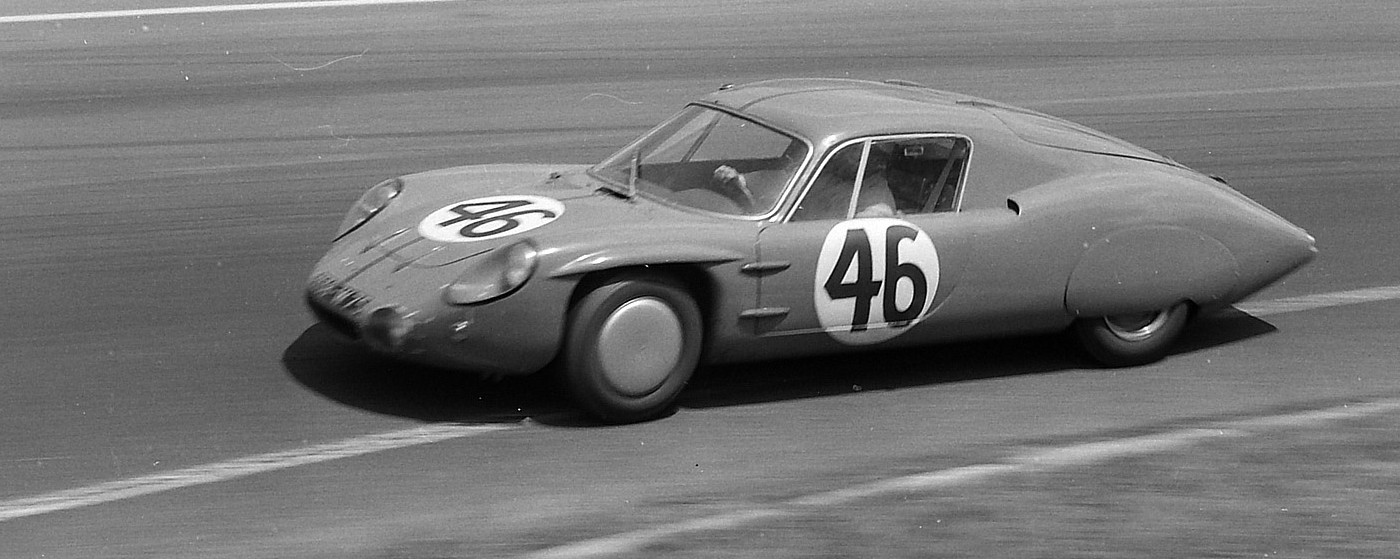
Beginning in 1963, Alpine pitted itself against the gruelling Le Mans 24 Hours, targeting the ‘Performance Index’ and ‘Efficiency Index’ accolades rather than outright victory. With their small Gordini engines, the Alpines stood out for their aerodynamic efficiency. Two victories ensued, in 1964 with the M64 crewed by Henry Morrogh / Roger Delageneste and again two years later with the A210 piloted by Jacques Cheinisse / Roger Delageneste.
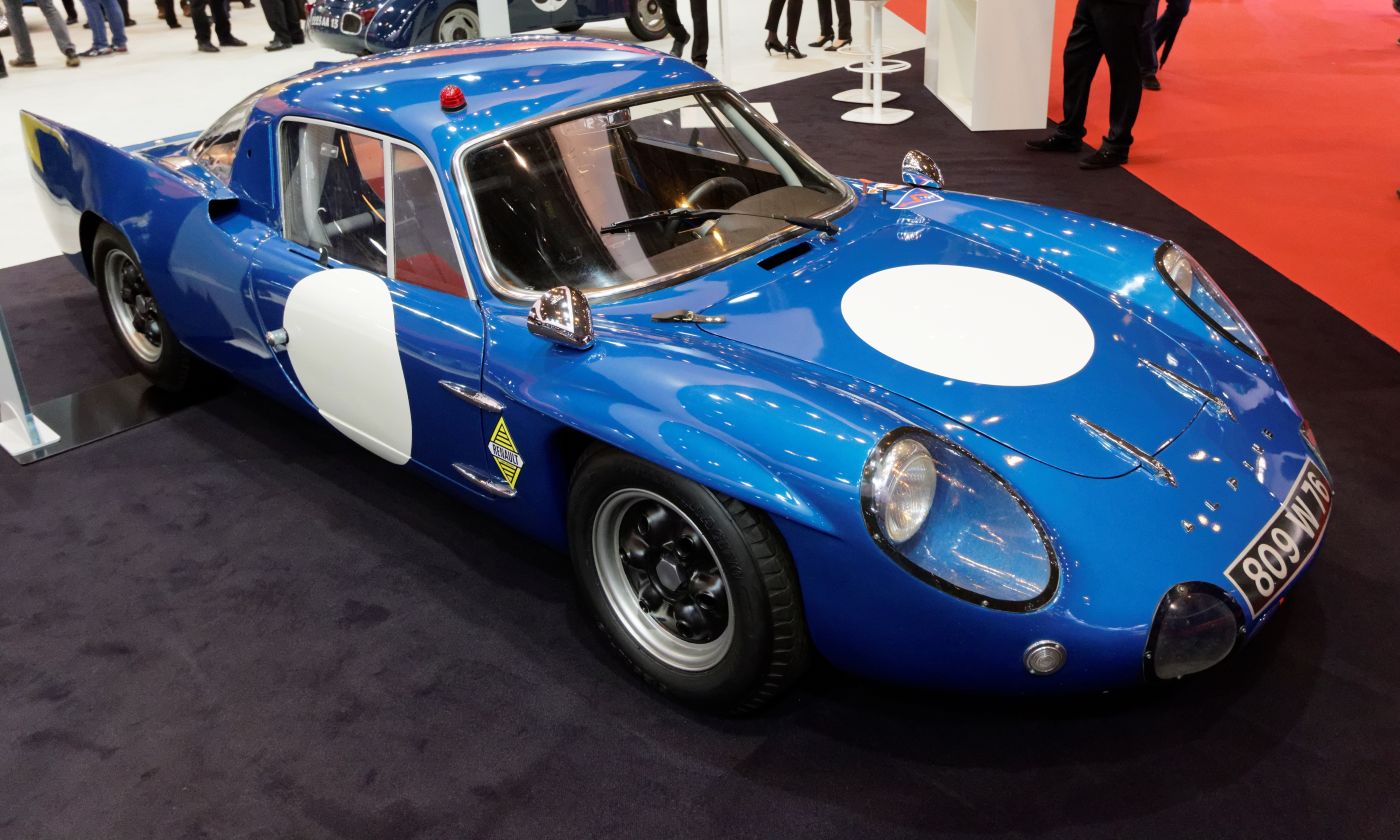
Alpine M65 (1966-1969)
A purpose-built sports prototype, the M65 was developed during a fertile design era for endurance racing cars triggered by the so called ‘Index of Performance’. This ingenious handicap system promoted all kinds of experimentation with mechanical layout, engine size and aerodynamics, cars scoring for efficiency as well as speed, Alpine winning it in 1964 with the M64.
The befinned M65 was powered by a Gordini-tuned 1300 engine that started life as the 1100 unit used by the Renault 8 Gordini. Its 130bhp was impressive for the engine’s size, and coupled with the M65’s modest 669kg and fish-like slipperiness, allowed the Alpine to run at over 160mph on the Mulsanne straight.
In 1965 it won the 1300cc class at the Reims 12 Hours, topping that with a startling win in the Nürburgring 500km race, pair of M65s appearing at Le Mans in the same year, although Mauro Bianchi and Henri Grandsire would retire on lap 32.
The Alpine name also achieved success in single-seaters, with Henri Grandsire winning the French F3 Championship in 1964. Several years later, Patrick Depailler (1971) and Michel Leclère (1972) repeated the feat.
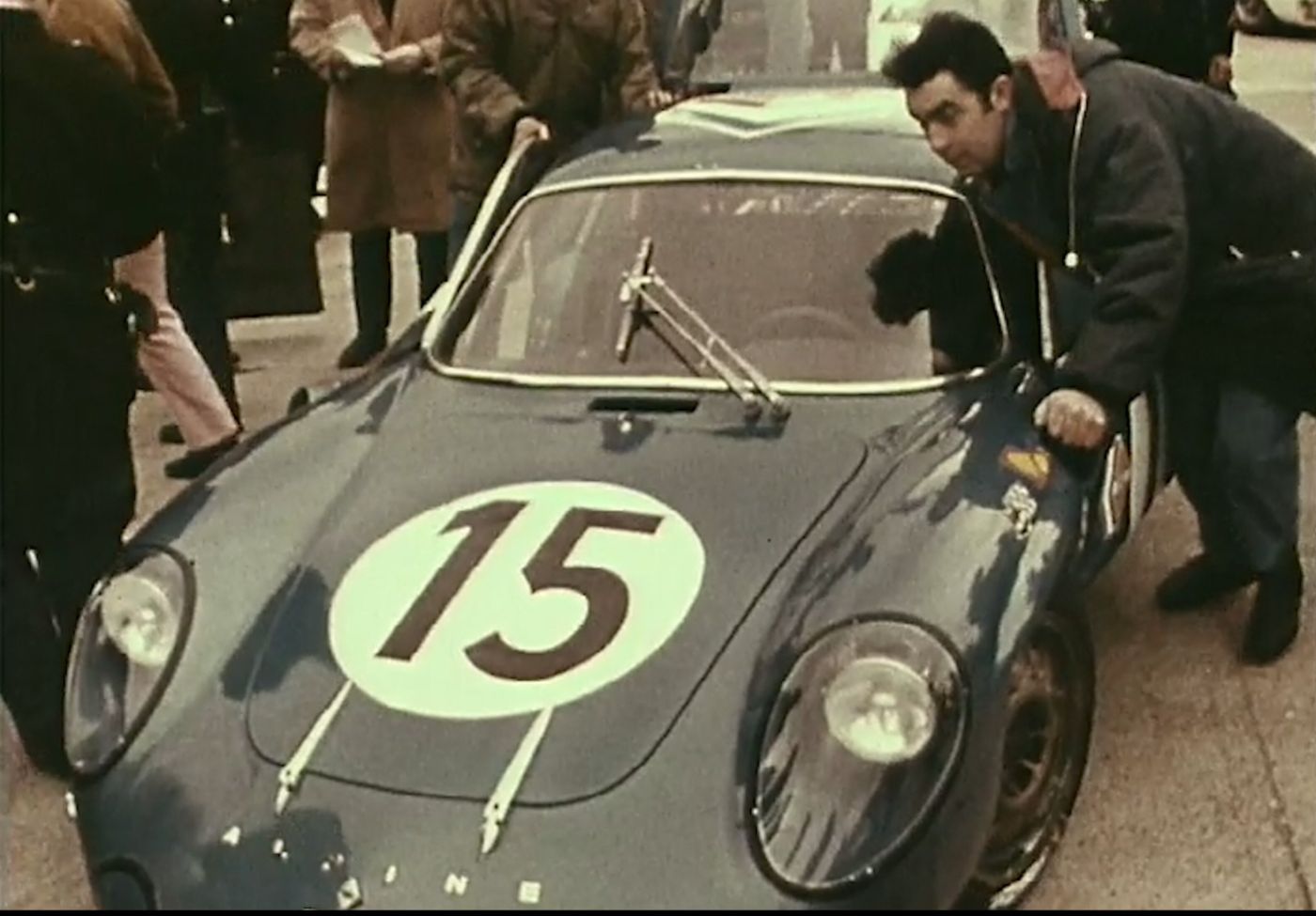
In rallying, the A110 Berlinette swiftly showed itself to be a potent force. In 1968, Gérard Larrousse came close to winning in Monte-Carlo, but it was the team of ‘Musketeers’ who truly earned the Dieppe-based manufacturer its spurs within the sport. Alpine-Renault sporting director Jacques Cheinisse recruited a ‘dream team’ composed of Jean-Pierre Nicolas, Jean-Claude Andruet, Bernard Darniche and Jean-Luc Thérier. Other drivers would subsequently bolster this legendary quartet, such as Ove Andersson who triumphed in Monte-Carlo in 1971.
In 1973, the Alpine-Renault squad competed for the very first World Rally Championship title. The season began superbly, with a one-two-three finish for Andruet, Andersson and Nicolas in Monte-Carlo. Across 13 rounds, the Berlinette won six times and on every type of terrain: Monte-Carlo (Andruet), Portugal (Thérier), Morocco (Darniche), Acropolis (Thérier), Sanremo (Thérier) and Tour de Corse (Nicolas). The last of those victories saw Alpine conclude the campaign in fine style, with another top three lock-out to write the closing chapter of an extraordinary story! These results crowned Alpine-Renault World Champion, ahead of rivals Fiat Abarth and Ford.
The 1973 season also witnessed the re-launch of Alpine’s endurance racing programme, which had been halted after the disappointment of the A220 at the end of the 1960s. This time, the brand had the top step of the podium firmly in its sights. Victory edged closer year by year until it was finally achieved in 1978. Behind the wheel of the Alpine Renault A442-B, Jean-Pierre Jaussaud and Didier Pironi triumphed ahead of the A442 (crewed by Guy Fréquelin and Jean Ragnotti) which came fourth.
With its mission accomplished, Renault was able to turn its attentions towards Formula 1 with its 1.5-litre V6 turbo engine.
The Alpine A310 similarly enjoyed its days in the sun, tasting glory with Jean Ragnotti, Bruno Saby and Jean-Pierre Beltoise – French Rallycross Champions in successive years from 1977 to 1979 – as well as Guy Fréquelin, the 1977 French Rally Champion.
Following the organisation of the Alpine Europa Cup – contested as a curtain-raiser to Formula 1 Grands Prix with the GTA model – the brand’s motorsport activities drew to a close in 1988.
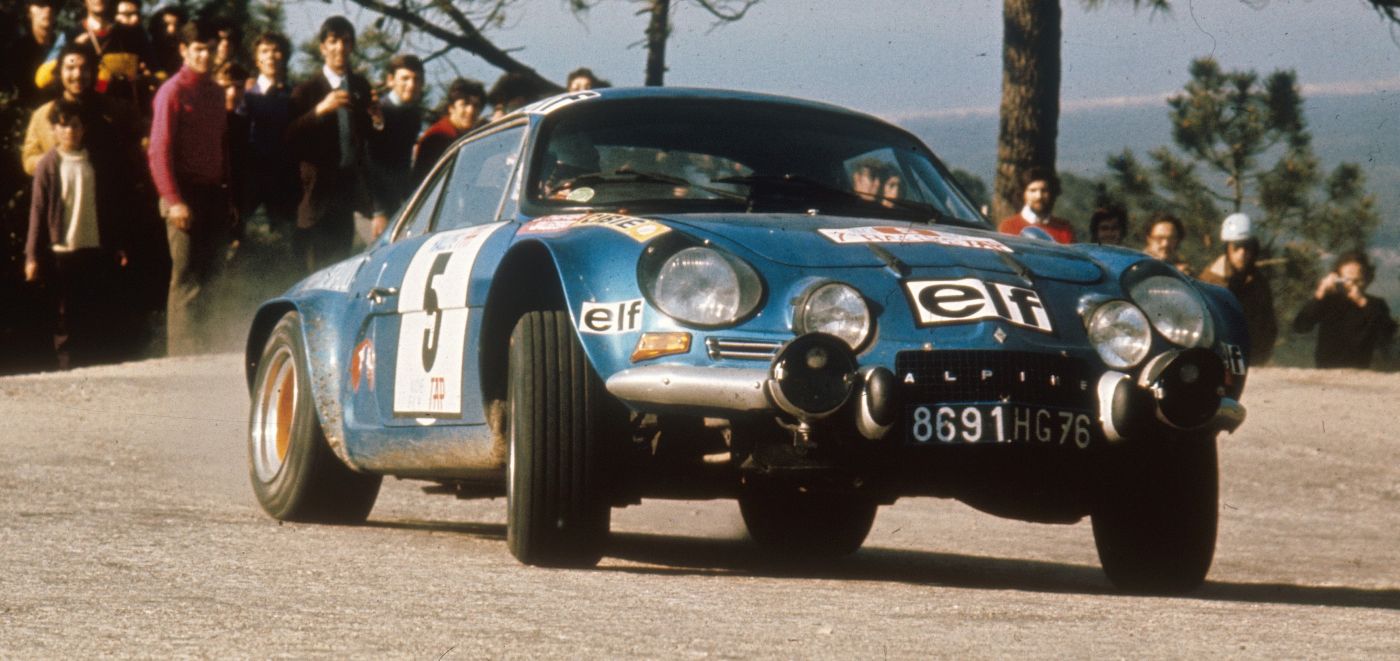
Alpine’s cars will be taking centre stage in the Earl’s Court display, led by the works A110 Berlinette (1973) that carried Alpine to success in the inaugural World Rally Championship. Notable results include Bernard Darniche’s victory on the 1973 Rallye du Maroc and Marianne Hoepfner’s entry in the 1974 Press On Regardless Rally in the USA. The A110 Berlinette remains one of the most iconic rally cars of its era, combining agility, lightness and outright speed.
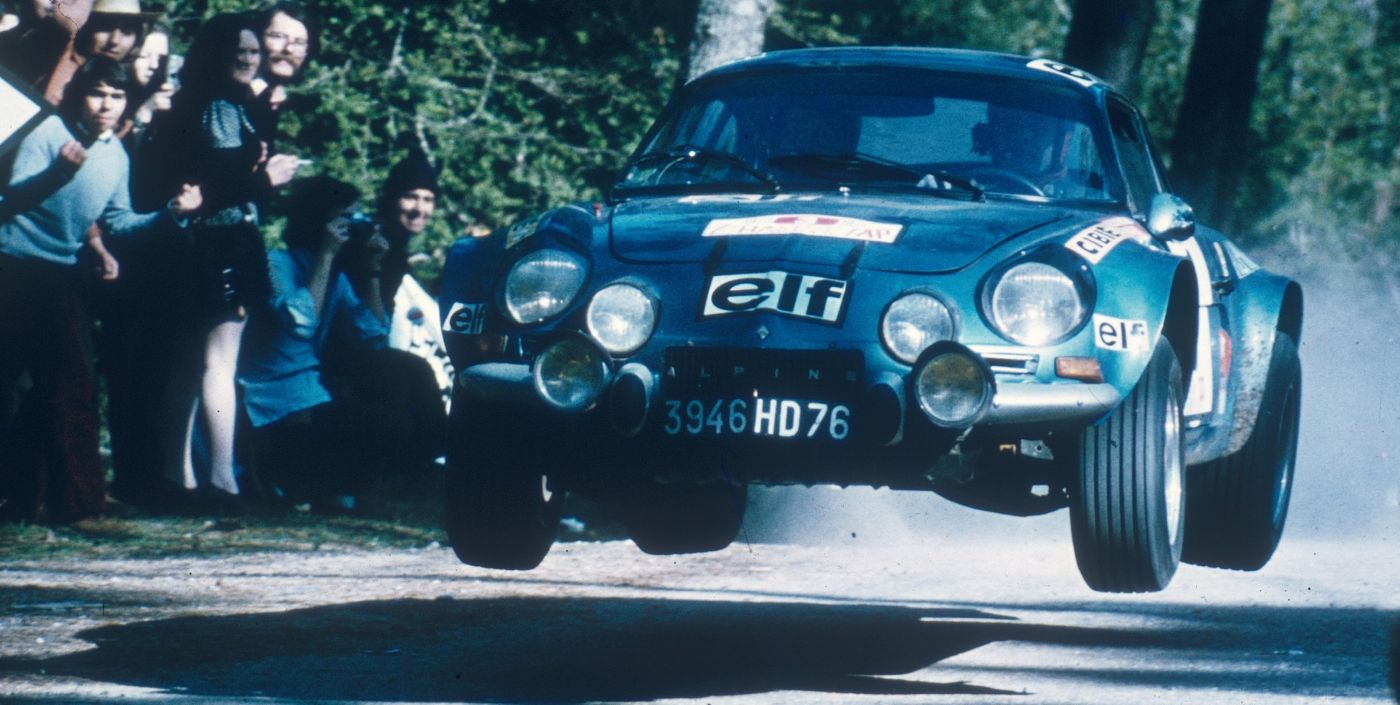
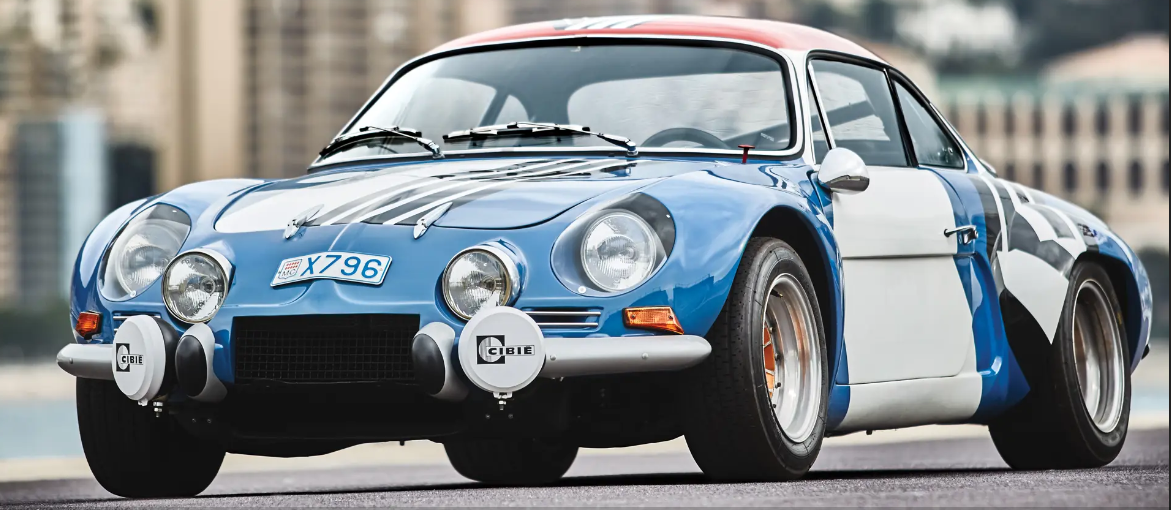
Alpine A110 1800 Groupe 4
A competition version of the A110, this Groupe 4 car is powered by the largest engine used by the model. By this point the A110 was beginning to be beaten in rallies, but only after a long period of success that included a World Rally Championship win in 1973.
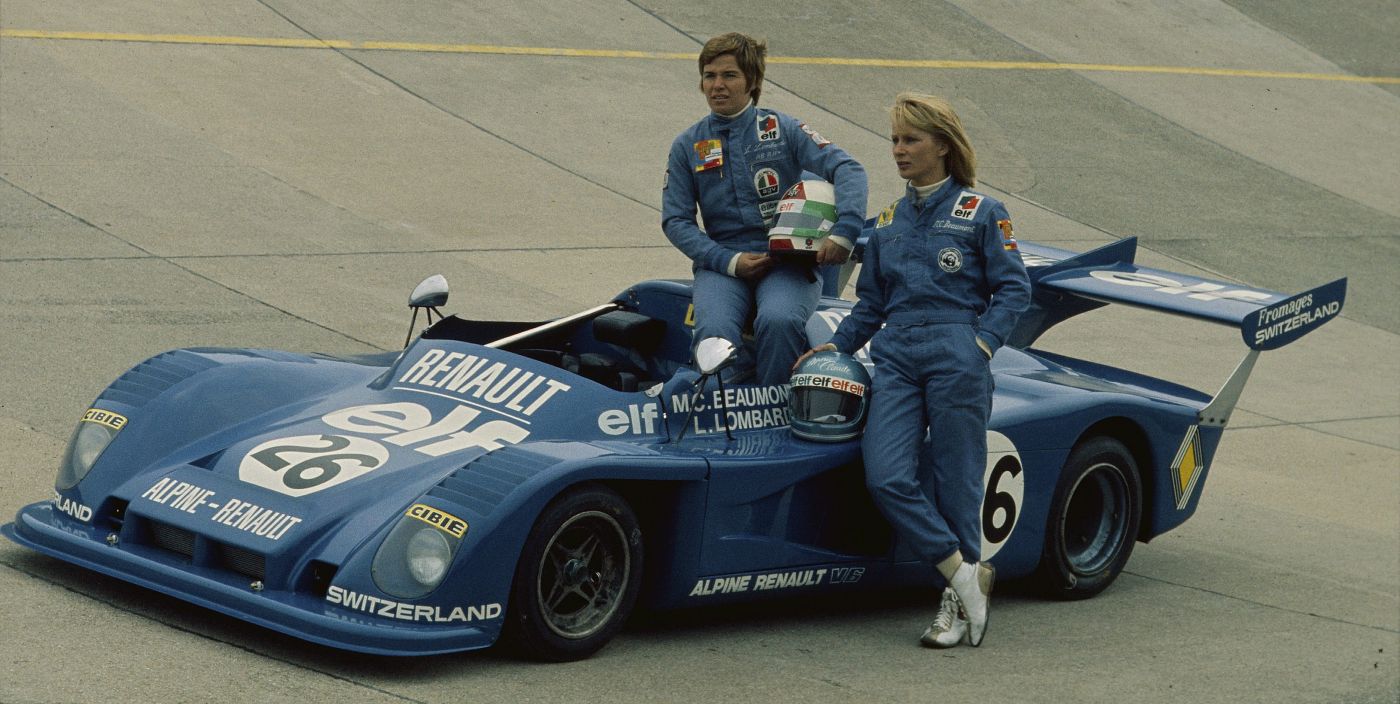
The Alpine-Renault A441 C Le Mans prototype (1975) that competed in the World Endurance Championship. It was driven with distinction by several leading female racers, including Marie-Claude Beaumont and Lella Lombardi, who achieved class-leading performances in the ultra-competitive 2-litre category.
Women in motorsport and Alpine
Alpine’s Revival showcase highlights the contribution of female drivers who have left their mark in Alpine machinery. These range from Michèle Mouton, who began her international rally career in the A110 before going on to become one of the greatest drivers in World Rally history, alongside Marianne Hoepfner, an entrant in the 1974 Press On Regardless Rally in the USA, to Marie-Claude Beaumont and Lella Lombardi, who competed in the A441 C at Le Mans in the 1970s.
That spirit continues today through Alpine’s support of the Academy roster of racing drivers, where the brand nurtures the next generation of female talent. One of Alpine’s newest F1 Academy signings, Nina Gademan, 21, who competes in the F1 Academy, won by her predecessor Abbi Pulling last season, will be present at Goodwood to meet fans and inspire future racers alongside Sukhmani Khera, 13, a rising star in the British karting scene.
The pair will be joined by Alpine UK brand director Nicola Burnside, who combines running the company with a passion for amateur racing, having competed at Silverstone, Le Mans, Nürburgring, and even last year’s Revival.
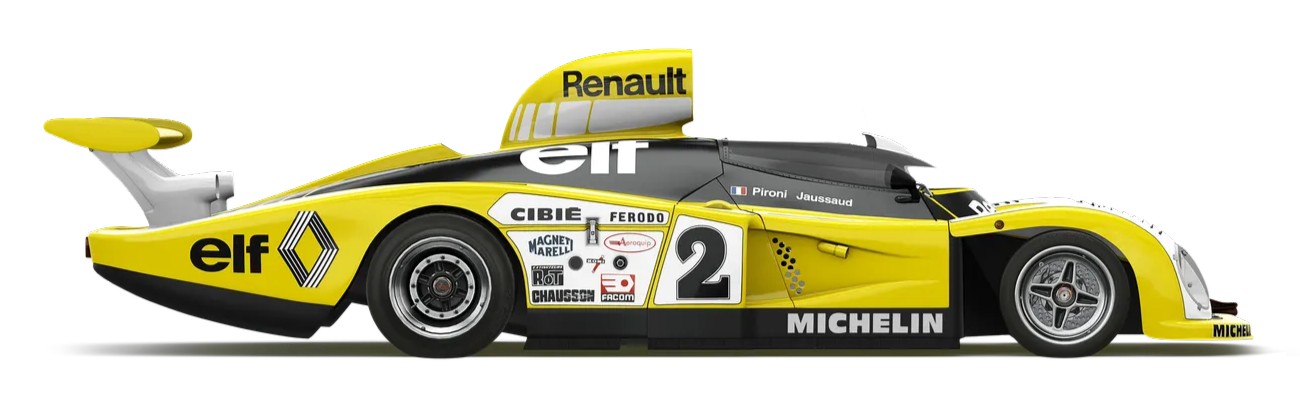
Alpine A442 B
This is the model that won Alpine outright victory in the 1978 Le Mans 24 Hours, with Jean-Pierre Jaussaud and Didier Pironi. Its success was the culmination of five years of work, the A 442B evolving from the first normally-aspirated A 440, the A 441 and then the turbocharged 442. There were many wins in Sport world championship events on the way, but plenty of heartache before Alpine’s ultimate goal was scored.
The A 442B was powered by a 2.1 litre turbocharged V6, hit a staggering 223mph on the Mulsanne straight and set what was then the fastest ever lap time recorded by an Alpine at La Sarthe. On the day of its victory Renault President and CEO Bernard Hanon, who had set Alpine’s Le Mans goal, announced that the team would withdraw from endurance racing to contest Formula One.
Each day, René Arnoux will pilot the A442b up the hill climb. René’s motor racing career spans 12 Formula One seasons (1978 to 1989), competing in 165 World Championship Grand Prix, winning seven of them, achieving 22 podium finishes and scoring 181 career points..
You must be logged in to post a comment.